

Where
Salt Lake City, Utah, Little America Hotel. Book your room.
SOLD OUT!
Registration is closed and we are officially sold out.
Featured keynote speakers
Abby Cox
First Lady of Utah
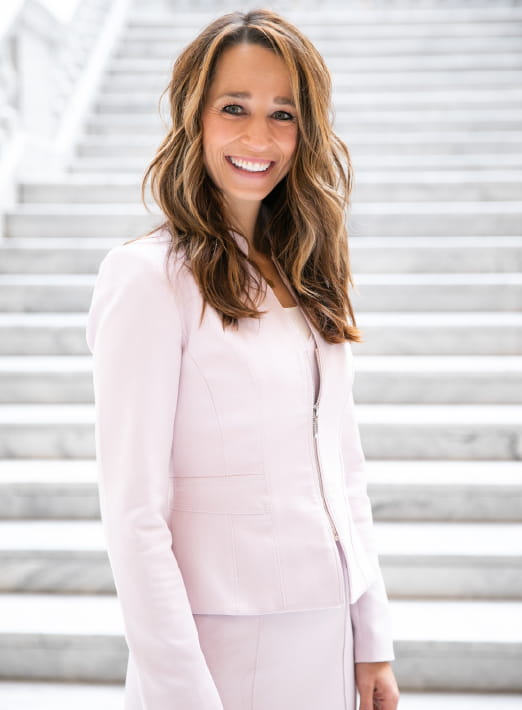
As Utah’s first lady, Abby Cox hopes to inspire Utahns to break down the barriers that separate people from treating one another as equals. She is an outspoken advocate for “getting proximate,” connecting through our differences and combating the empathy crisis our country faces.
Abby’s initiative is called Show Up because you can pretend to care, but you can’t pretend to Show Up. She uses her platform to champion educator wellness, foster care awareness and support, statewide service and expanded access to Special Olympics Unified Sports in schools across the state.
She and Gov. Cox attended high school together in rural Mount Pleasant, Utah, and both went on to graduate from Snow College in Ephraim, Utah. He followed her to Utah State University, where she earned a degree in special education with a dual emphasis in early childhood and severe disabilities.
She and the governor are joining forces to promote literacy and look forward to seeing a renewed love of reading in communities across the state.
Sharon McMahon
“America’s Government Teacher”

Sharon McMahon, #1 New York Times bestselling author, educator and host of the chart-topping podcast “Here’s Where It Gets Interesting,” is redefining how we communicate by turning confusion into clarity, inspiring change, and teaching others how to take action by doing the next needed thing.
A former high school government and law teacher, McMahon became known as “America’s Government Teacher” during the 2020 elections for her viral efforts to combat political misinformation. Her knack for breaking down complex topics with clarity, humor and a steadfast commitment to facts has attracted a community of over one and a half a million followers—affectionately called the “Governerds.”
McMahon’s newsletter, The Preamble, is one of the largest publications on Substack, providing historical context and nonpartisan insights to help readers navigate today’s political landscape. Her debut book, The Small and the Mighty, has been celebrated as one of 2024’s top reads by Barnes & Noble, Amazon and Goodreads, highlighting the unsung heroes who shaped America.
Beyond education, McMahon leads philanthropic initiatives that have raised over $11 million to address critical needs, from medical debt relief to disaster recovery. She inspires audiences with a message of hope: History shows us that even small actions can create powerful change.Learn more at SharonMcMahon.com or follow her @SharonSaySo.
Dr. Molly Hart
Utah’s Superintendent of Public Instruction

Dr. Molly Hart is Utah’s Superintendent of Public Instruction and a lifelong educator with more than 25 years of experience in classrooms and schools and as a leader at the system level. Her career ranged from paraprofessional and teacher to principal and executive director, serving learners from elementary through higher education in multiple states.
She was elected to the Utah State Board of Education in 2020 and was re-elected in 2024. In her current role, Hart focuses on strengthening student outcomes, aligning systems to better support schools and ensuring that every learner is prepared for meaningful opportunities after graduation. She believes strong systems and clear expectations create the conditions for every student to succeed, and she is committed to meaningful accountability and supporting educators in that work.
Hart is a graduate of Michigan State University, where she earned a degree in Family Community Services. She also holds several degrees in education, including a doctorate in educational leadership.
Her leadership has been recognized with honors including Vocational Teacher of the Year, the Utah PTA Outstanding School Administrator Award, and Canyons District Elected Official of the Year.
Pierre Thomas
Chief Justice Correspondent, ABC News
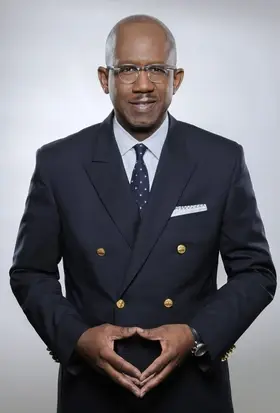
Pierre Thomas is the chief justice correspondent for ABC News. He joined the network in November 2000 and reports for “World News Tonight with David Muir,” “Good Morning America,” “Nightline,” “This Week with George Stephanopoulos” and all platforms, including ABC News Live, ABC News Radio and ABC News Digital.
Thomas has earned several notable awards during his distinguished career, including one of the most prestigious in broadcast journalism: The Paul White Award from the Radio Television Digital News Association, its highest honor. Thomas also eared the organization’s second-highest honor, the John F. Hogan Distinguished Service Award, joining Walter Cronkite as one of only three journalists to receive both awards. In 2024, the Emmys® inducted him into its Silver Circle, calling him one of the most trusted names in news. In 2022, the Society of Professional Journalists’ Washington, D.C., chapter inducted Thomas into its Hall of Fame. That same year, he received the John S. Carroll Journalist of the Year from the News Literacy Project for his commitment to quality journalism and news literacy education.
Thomas is a member of the Gridiron Club, the nation’s oldest and one of its most prestigious journalistic organizations and is a past chairman of the Reporters Committee for Freedom of the Press, which honored him with the Career Achievement Award in 2023.
John Arthur
2021 Utah Teacher of the Year

John Arthur, a sixth-grade teacher at Meadowlark Elementary in Salt Lake City, was named the 2021 Utah Teacher of the Year for his dedication to student-led learning and civic engagement. He empowers his diverse students through storytelling, technology and project-based learning, fostering a classroom where every voice matters.
Beyond teaching, Arthur advocates for equitable education and mentors fellow educators. A finalist for National Teacher of the Year, he amplifies student voices on national platforms, inspiring young learners to become leaders in their communities.
Patricia M. Hunt
Veteran Public-School Educator
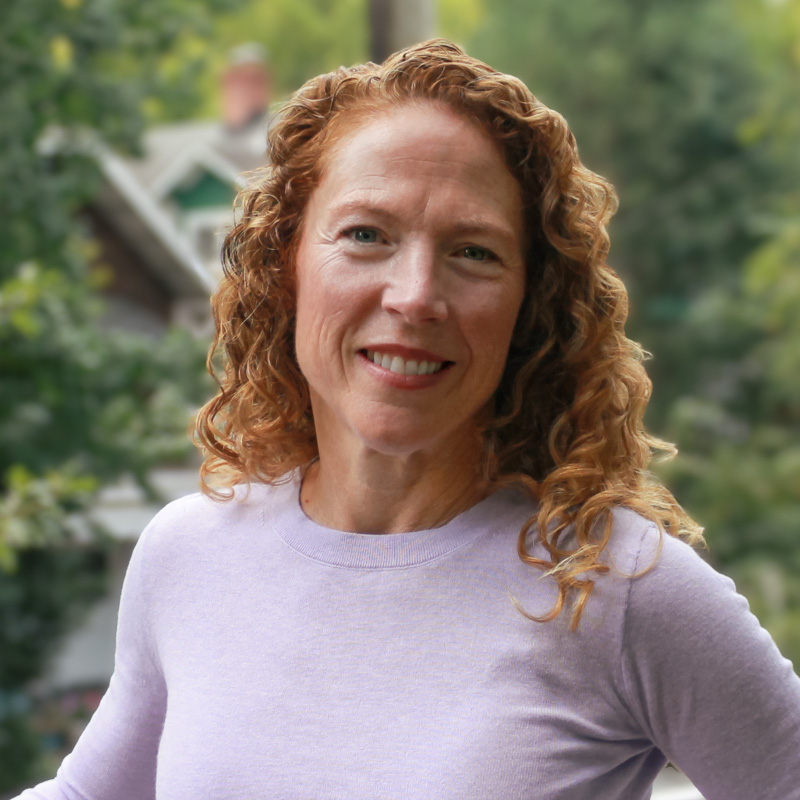
Patricia M. Hunt, who teaches at Wakefield High School in Arlington, Virginia, is a veteran public-school educator with more than 33 years of experience as a social studies teacher. In 2016, she piloted the News Literacy Project’s Checkology® curriculum with her senior U.S./Virginia Government students and has since made it an integral part of the course. Her classroom has been featured in more than a dozen news stories, including NPR’s The Classroom Where Fake News Fails. Patricia is a leader in social-emotional learning in Arlington and helped develop a countywide curriculum that embeds SEL instruction in every high school classroom. A two-time Fulbright Scholar, she has collaborated with educators in Russia, Chile and Argentina. Before joining Arlington Public Schools, Patricia taught in Washington, D.C., and Massachusetts. She earned a bachelor’s degree in sociology from Franklin Pierce University and a master’s degree in history from Boston University as a James Madison Fellow.
McKenzie Romero
Utah Journalist
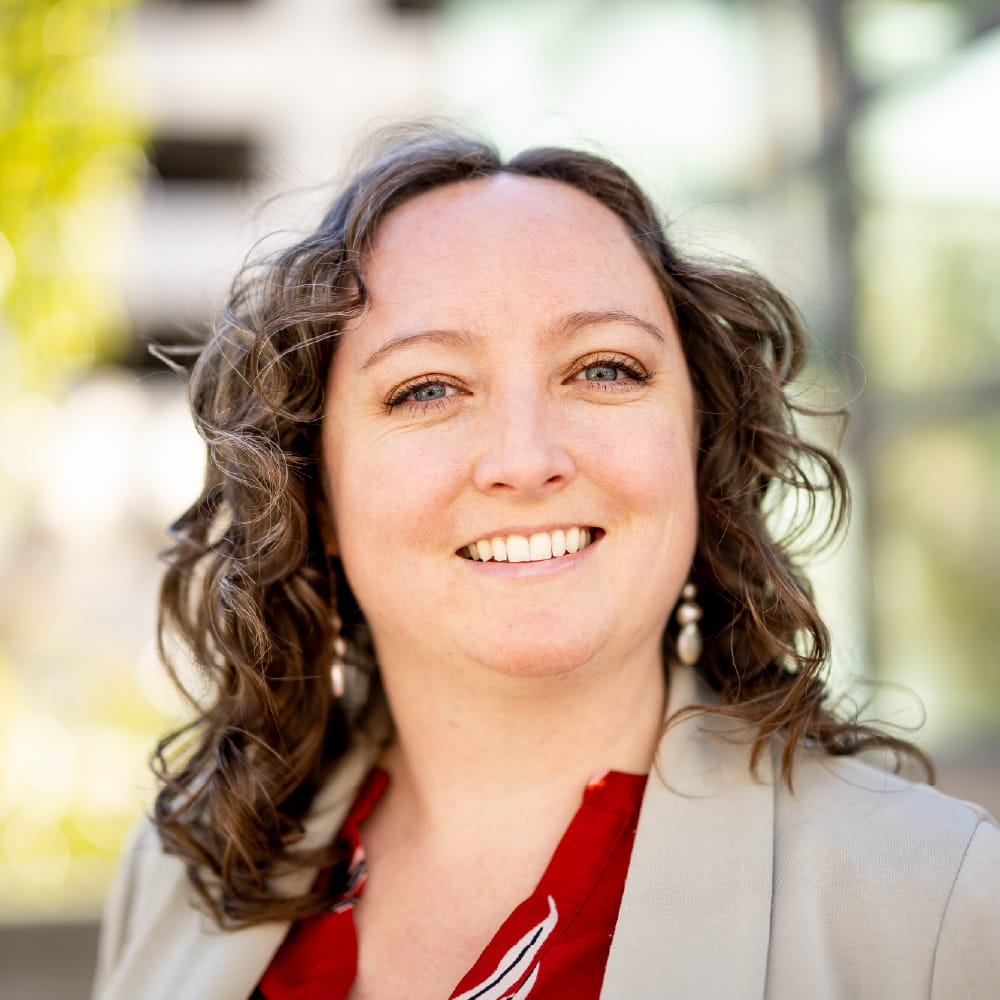
McKenzie Romero started her career in Utah journalism when she was 15 years old writing for the Standard-Examiner’s teen section. After studying journalism and Spanish at Southern Utah University, she went on to more than a decade as a reporter and editor at Deseret News in Salt Lake City, where she covered courts, crime and community, and led a team of award-winning journalists. A longtime member of the Society of Professional Journalists, she is a board member for the Utah Headliners Chapter and represents journalists in Utah, Wyoming, Colorado and New Mexico. McKenzie is a passionate advocate for open meetings and records, ethical reporting and the future of journalism. /p>
Gretchen Zaitzeff
District Library Media Specialist for Canyons School District

Gretchen Zaitzeff is the District Library Media Specialist for Canyons School District in Sandy, Utah. In her role, she supports library educators in creating dynamic programs centered on information, news and media literacy integration.
In 2022, Zaitzeff co-led Canyons’ participation in the News Literacy Project’s inaugural District Fellowship program, resulting in Information Investigators, a 3-year professional learning cohort of over 300 educators. As co-lead of the Utah Information, News and Media Literacy Collaborative, she works with administrators, educators and policymakers to embed these critical skills into K-12 curricula statewide.
Honored as an Operation Literacy Book Hero and Utah Valley University Literacy Champion, Zaitzeff holds degrees from Brigham Young University and the University of Illinois Urbana-Champaign iSchool. Before coming to Utah, she was a school librarian in Illinois and New York. She is a Past President of the and a member of The Salt Lake Tribune’s editorial board. She speaks nationally on school libraries and their roles in news literacy acquisition, advocating that well-informed, news and media-literate citizens save lives and preserve democracy.
Registration rates
| Registration type | Date | Rate |
|---|---|---|
| District fellows | Jan. 16-30 | 20% off $199 with promo code |
| Group registration (4 or more) | Jan. 16 – July 31 | 10% off; email conference@newslit.org for this special rate. |
| Early bird | Jan. 16 – Feb. 28 | $199 |
| Standard | March 1 – July 31 | $299 |
| Late & onsite | Aug. 1 – Oct. 8 | $349 |
Purchase orders
You may register online using a purchase order. Purchase orders also should be emailed to conference@newslit.org. Full payment must be made no later than 5 p.m. ET on Sept. 4, 2026.
Purchase orders are not eligible for the early bird rate.
Refund Policy
This discounted rate is nonrefundable. However, you may transfer registration to another individual in your organization by Sept. 30, 2026. Submit all requests in writing to conference@newslit.org.
Cancellation requests must be made in writing to conference@newslit.org.
Requests received by May 31, 2026, will be refunded in full, minus a $35 handling fee.
Requests received between June 1 and Sept. 4, 2026, will receive a 50% refund, minus a $35 handling fee.
Requests received after Sept. 4, 2026, will not be refunded. However, you may transfer registration to another individual in your organization until Sept. 30, 2026.
All cancellations will be processed in the same manner as original payment. If paid by credit card, the refund will be issued in 10 business days. Payments made by check or by purchase order will be refunded as checks and may take up to 15 days after the conference to process.
Transfer requests must be submitted in writing to conference@newslit.org by Sept. 30, 2026. Please include your registration number in the request.
The News Literacy Project does not award payment credit toward future services, products or events.
No-shows are not eligible for refunds.
The benefits
What can you expect from the National News Literacy Conference?
Presented by the News Literacy Project, the nation’s leader in K-12 news literacy education, the inaugural National News Literacy Conference will bring together educators and school leaders from across the U.S. for three days of professional development, networking and inspiration. Join us to hear from leading experts and gain new perspectives on news literacy education.
Schedule at a glance
Day 1 — October 8 · Pre-Conference Day
Day 1 — October 8 · Pre-Conference Day
| Time | Room 1Arizona | Room 2Wyoming | Room 3Teton | Room 4Olympus | Room 5Idaho | Room 6 — Flex / OverflowLA Ballroom |
|---|---|---|---|---|---|---|
| 11:00am – 7:00pm · Registration & Networking (all attendees) | ||||||
| 1:00 – 1:50pmBreakout Session I | What’s the Purpose?: Helping Students Think Critically About Types of InformationTracee Stanford |
Behind the News: Investigating Credibility in a Digital WorldMae Scott |
Anti-Scam Academy: Avoiding Scams and MisinformationGretchen Zaitzeff & Dani Sloan |
Is This Influencer Full of It?Bobkowski, Davis, Hoover, Pignolet |
Teaching the First Amendment and Press Freedoms Through Watchdog JournalismPeter Adams |
Cognitive Biases and the News EcosystemJulia Lennox |
| 2:00 – 2:45pm · Afternoon Break | ||||||
| 3:00 – 4:00pmBreakout Session II | A News Media Literacy Unit and Culminating Project for HS StudentsAdrianne Spencer |
What Stories Can Students Best Tell? Media Literacy Through Multimedia Journalism with PBS News Student Reporting LabsAnthony Payne, Emily Dobkin & Christopher Sloan |
From Journalism 1 to a Student NewsroomSireesha Rutter |
One Tool to Rule Them All: SCOPES — A Universal Media Analysis ToolErika Thorsen |
Designing with IntentionalityAshley Pena |
A Healthy Information Ecosystem Starts With NewsHannah Covington |
| 4:00 – 5:00pmBreakout Session III | Digital Literacy in Every ClassroomKelly Jeppson & Aaron Crawford |
Building the Baseline: Why Early Exposure to Real News Is a News Literacy StrategyJennifer Anderson, KidNuz |
Visual News Literacy Through Student VideosLesley Farmer |
Photos: Fact Checking Your Own Background KnowledgeMelissa Frost |
Putting News Literacy Into Action: Building Students’ Civic CapacityPamela Brunskill |
TBD |
| 5:00pm · End of Day | ||||||
Day 2 — October 9 · Main Conference Day
Day 2 — October 9 · Main Conference Day
| Time | Room 1Arizona | Room 2Wyoming | Room 3Teton | Room 4Olympus | Room 5Idaho | Room 6 — Flex / OverflowLA Ballroom |
|---|---|---|---|---|---|---|
| 6:30 – 8:30am · Breakfast (provided) | ||||||
| 7:00am – 7:00pm · Registration Open | ||||||
| 8:30 – 9:30am · Opening General Session | ||||||
| 9:45 – 10:45amBreakout Session IV | A WISE Framework: Mixing Human Judgment and AI to Support News LiteracyLarson, Vontz, Clark |
How Teachers Can Work with Established Newsrooms to Amplify Youth VoicesHeather MayCo-presenters: Brandon Winn, Callie Campbell, Hillary Kimball & Marcie Young Cancio |
Breaking News: Teach Students to Identify & Produce Credible Journalism in Five DaysGretchen Zaitzeff & Kirsten Stewart |
Digital Literacy in the AI EraJoel Breakstone |
Game On: Investigating Generative AI Through PlayCynthia Sandler |
Media MentorshipM. Linsey Kitchens |
| 10:45 – 11:00am · Morning Break | ||||||
| 11:00am – 12:00pmBreakout Session V | Beyond the Scroll: Teaching News Literacy in the Content AgeSam Helmick |
All About the District Fellowship ProgramElliott Goodman |
Prompt, Then Verify: Teaching Research Skills in the Age of AILindy Hockenbary |
Dihydrogen MonoxideEric Jourgensen |
Similar Skills, New SearchElise Silva |
John Arthur |
| 12:00 – 1:30pm · Lunch (provided) · Ballroom | ||||||
| 1:30 – 2:30pmBreakout Session VI | Pause, Look, ReflectAlex Luciano |
A Deep Dive Into the News Literacy StandardsJackie Miller & Jeffrey Wilhelm |
Teaching How AI Shapes the NewsDaniel Trielli & Derek Willis |
Finding (and Using) Fresh MediaMiranda Stefano |
The Floor Is YoursKimberly Fradelis |
Collaborative Product Learning SessionBob Robertson-Boyd |
| 2:30 – 3:00pm · Afternoon Break | ||||||
| 3:00 – 4:00pmBreakout Session VII | The Folklorist’s Guide to MisinformationAaron Crawford |
The Bias Backfire: Are We Teaching Critical Inquiry or Motivated Distrust?Peter Adams |
Better Together: Collaborative Approaches to News and Media LiteracyErin Olson & Davina Sauthoff |
Fighting Fake NewsJackie Miller & Jeffrey Wilhelm |
What to Expect When You’re ElectingM. Linsey Kitchens |
Check. Recheck. Vote: AI Literacy for Civic and Election InformationLisa Reppell |
| 4:00 – 5:30pm · Break / Transition to Evening | ||||||
| 6:30 – 8:30pm · Turning the Tide: How News Literacy Can Reshape the Information Economy | ||||||
Day 3 — October 10 · Closing Day
Day 3 — October 10 · Closing Day
| Time | Room 1Arizona | Room 2Wyoming | Room 3Teton | Room 4Olympus | Room 5Idaho | Room 6 — Flex / OverflowLA Ballroom |
|---|---|---|---|---|---|---|
| 7:00am – 10:00am · Registration Open | ||||||
| 8:30 – 9:30amBreakout Session VIII | The P.E. Teachers Too?Carolyn Martinez-Ross |
Journalism as Global PedagogyRebecca Chambers |
The Mirror Before the MicroscopeGriselis Reyes Gil |
More Informed, More Critical, More EmpoweredTibbs, Parker, Scanelli |
Thinking Clearly in Turbulent TimesCait Houlbrook |
Collaborative Product Learning SessionBob Robertson-Boyd |
| 9:30 – 10:00am · Morning Break | ||||||
| 10:00 – 11:30am · Keynote: Having Productive Conversations Across the Aisle: Truth, Civility, and Critical Thinking — Sharon McMahon · LA Ballroom | ||||||
Session Descriptions
Anti-Scam Academy: Avoiding Scams and Misinformation
Gretchen Zaitzeff & Dani Sloan
Anti-Scam Academy: Avoiding Scams and Misinformation
Gretchen Zaitzeff & Dani SloanThis session equips K-12 educators with essential skills needed to navigate misinformation and digital scams. Using “reality checking” frameworks, it teaches participants to verify sources, analyze evidence and practice lateral reading to distinguish credible news and information from deceptive content.
Behind the News: Investigating Credibility in a Digital World
Mae Scott
Behind the News: Investigating Credibility in a Digital World
Mae ScottEducators will discover fast, practical strategies to help students identify misinformation in today’s digital world. In this session, educators will analyze real headlines, investigate images and evaluate viral posts using simple fact-checking tools. They will leave with tools that build critical thinking and empower students to verify before they share.
Cognitive Biases and the News Ecosystem: How Students Make Decisions About What to Trust
Julia Lennox
Cognitive Biases and the News Ecosystem: How Students Make Decisions About What to Trust
Julia LennoxEducators will explore how cognitive biases can act as “thinking traps” that shape how we interpret news and information. Through interactive exercises and real-world examples, educators will learn strategies to help students recognize and resist cognitive biases, slow down their thinking and make informed, fact-based decisions.
Designing With Intentionality: Using Curriculum Storyboarding to Rethink Your Media Literacy Curriculum
Ashley Pena
Designing With Intentionality: Using Curriculum Storyboarding to Rethink Your Media Literacy Curriculum
Ashley PenaWith access to thousands of resources and platforms, it can be overwhelming to plan units while trying to fit everything in. Sometimes educators are given a curriculum and have little to no autonomy in planning their units. This session will provide educators with a new way to think about planning.
Digital Literacy in Every Classroom
Kelly Jeppson & Aaron Crawford
Digital Literacy in Every Classroom
Kelly Jeppson & Aaron CrawfordDigital literacy is no longer a single teacher’s responsibility in the school building – information about news literacy in a digital age belongs everywhere. This session will provide information for every teacher on how to talk to students about online information and the role of a good digital citizen.
Is This Influencer Full of It? How to Help Students Navigate News From Content Creators
Bobkowski, Davis, Hoover, Pignolet
Is This Influencer Full of It? How to Help Students Navigate News From Content Creators
Bobkowski, Davis, Hoover, PignoletYoung people today increasingly get their news from influencers. Join two practicing journalists and two journalism educators to learn about the independent journalists and content creators who cover a range of subjects on social media, and how to help students distinguish between more and less credible social media creators.
A News Media Literacy Unit and Culminating Project for High School Students
Adrianne Spencer
A News Media Literacy Unit and Culminating Project for High School Students
Adrianne SpencerLearn how to engage high school students through a multiweek unit using NLP resources that culminates in a project requiring students to evaluate multiple news media outlets. Educators will leave this session with a plan and materials they can implement immediately to teach and assess students’ news literacy skills.
Building the Baseline: Why Early Exposure to Real News Is a News Literacy Strategy
Jennifer Anderson, KidNuz
Building the Baseline: Why Early Exposure to Real News Is a News Literacy Strategy
Jennifer Anderson, KidNuzWe spend significant time teaching kids how to evaluate news – but what if we’re skipping a step? Before children can identify misinformation, they need a baseline: a felt sense of what trustworthy news actually looks and sounds like. That foundation comes from early, repeated exposure to fact-based, age-appropriate reporting.
From Journalism 1 to a Student Newsroom: Building a Fact-First Culture in Middle School
Sireesha Rutter
From Journalism 1 to a Student Newsroom: Building a Fact-First Culture in Middle School
Sireesha RutterLearn how to move students from Journalism 1 to a student-run newsroom grounded in ethics, verification and civic responsibility. This session shares a practical progression model that builds news literacy and empowers middle school students to produce and share credible, fact-based journalism.
One Tool to Rule Them All: SCOPES – A Universal Media Evaluation Tool
Erika Thorsen
One Tool to Rule Them All: SCOPES – A Universal Media Evaluation Tool
Erika ThorsenSCOPES is a practical, flexible tool to build students’ information literacy and critical thinking skills. The session will begin with a walk-through of the tool, provide a few completed examples and then move into a hands-on activity during which attendees use the SCOPES tool themselves to evaluate real pieces of media.
What Stories Can Students Best Tell? Media Literacy Through Multimedia Journalism With PBS News Student Reporting Labs
Anthony Payne, Emily Dobkin & Christopher Sloan
What Stories Can Students Best Tell? Media Literacy Through Multimedia Journalism With PBS News Student Reporting Labs
Anthony Payne, Emily Dobkin & Christopher SloanWhen students report stories in their community, they learn media literacy through mediamaking. Students learn how to research and talk to experts, as well as how to analyze and understand civic processes. PBS News Student Reporting Labs is a national multimedia youth journalism training program that trains educators and students to do this work.
A WISE Framework: Mixing Human Judgment and AI to Support News Literacy
Larson, Vontz, Clark
A WISE Framework: Mixing Human Judgment and AI to Support News Literacy
Larson, Vontz, ClarkThis workshop introduces the WISE AI Literacy Framework (Wisdom-centered, Informed, Safe, Ethical) to help educators teach news literacy across media and AI-generated content. Participants will explore practical strategies to help students interpret and evaluate information, recognize bias and make informed decisions by thoughtfully combining AI capabilities with human judgment.
Breaking News: Teach Students to Identify and Produce Credible Journalism in Five Days
Gretchen Zaitzeff & Kirsten Stewart
Breaking News: Teach Students to Identify and Produce Credible Journalism in Five Days
Gretchen Zaitzeff & Kirsten StewartPresenters will introduce a simple four-step framework that helps students move from analyzing evidence to marshaling it for use in their own speaking and writing. Participants will leave with a clear, adaptable roadmap for launching a student newsroom experience in their classrooms, using existing instructional time.
Digital Literacy in the AI Era: Preparing Young People for Civic Life
Joel Breakstone
Digital Literacy in the AI Era: Preparing Young People for Civic Life
Joel BreakstoneAI-generated content is making it increasingly difficult to sort fact from fiction online. How can we help students make sense of the information that floods their screens? During this interactive session, participants will engage with new resources from the Digital Inquiry Group designed to prepare students for civic life.
Game On: Investigating Generative AI Through Play
Cynthia Sandler
Game On: Investigating Generative AI Through Play
Cynthia SandlerGenerative AI increasingly shapes how students encounter and create information, yet how these systems work remains invisible. This interactive workshop uses games and play-based simulations to model core AI concepts and issues, equipping educators with strategies to support students in analyzing and making informed decisions about AI-generated information.
How Teachers Can Work With Established Newsrooms to Amplify Youth Voices
Heather May & Brandon Winn
How Teachers Can Work With Established Newsrooms to Amplify Youth Voices
Heather May & Brandon WinnDiscover how The Salt Lake Tribune’s groundbreaking Utah Teen Journalism Collaborative is empowering young Utahns and transforming classrooms. This session reveals how students produce real journalism, build media literacy and explore the First Amendment – while giving educators practical tools to launch impactful newsroom partnerships in their own communities.
Media Mentorship: Intergenerational, Student-Led Community Teaching
M. Linsey Kitchens
Media Mentorship: Intergenerational, Student-Led Community Teaching
M. Linsey KitchensThis session highlights a growing movement in Washington state: student-led social science fairs teaching adults media literacy. Explore the many possibilities for this engaging, community-building project, and learn how to adapt it to your population.
Beyond the Scroll: Teaching News Literacy in the Content Age
Sam Helmick
Beyond the Scroll: Teaching News Literacy in the Content Age
Sam HelmickWe are in the Content Age. Students are inundated with endless streams of posts, videos and AI-generated media, making it harder than ever to distinguish credible information from noise. Explore how educators and librarians help transform content into knowledge through context (discussion, instruction) and curation (journalism, collections and vetted sources).
Dihydrogen Monoxide: The ‘Deadly Chemical’ That Exposes How Misinformation Works
Eric Jourgensen
Dihydrogen Monoxide: The ‘Deadly Chemical’ That Exposes How Misinformation Works
Eric JourgensenHook students with a shocking warning about “dihydrogen monoxide” before revealing it’s water. This interactive session models a high-engagement lesson that builds verification skills, critical thinking and civic responsibility while aligning with NLP standards. Participants leave with ready-to-use resources and a repeatable framework for teaching misinformation detection.
Prompt, Then Verify: Teaching Research Skills in the Age of AI
Lindy Hockenbary
Prompt, Then Verify: Teaching Research Skills in the Age of AI
Lindy HockenbaryStudents are prompting AI for answers, but can they trust them? This session explores how research has shifted in the age of AI. Educators will learn practical strategies to leverage AI’s strengths while mitigating its risks, helping students evaluate accuracy, verify information and strengthen research skills.
Similar Skills, New Search: Applying News Literacy Approaches to AI Overviews and Synthetic Information
Elise Silva
Similar Skills, New Search: Applying News Literacy Approaches to AI Overviews and Synthetic Information
Elise SilvaAs AI literacy discussions dominate headlines, news literacy has ironically taken a back seat. Yet the overlap is significant. Together, educators will explore how news literacy frameworks apply to AI-mediated experiences like Google’s AI Overviews. Participants will leave with a practical workbook for caregivers and educators on discussing AI with youth.
A Deep Dive Into the News Literacy Standards and How to Teach Them in Your Classroom (in Any Discipline or Grade Level)
Jackie Miller & Jeffrey Wilhelm
A Deep Dive Into the News Literacy Standards and How to Teach Them in Your Classroom (in Any Discipline or Grade Level)
Jackie Miller & Jeffrey WilhelmThis interactive session will support educators in deconstructing the five news literacy standards and brainstorming tangible ideas they are currently using, or could use, to teach these standards at their grade level and in their content area. Educators will deepen and extend their knowledge through collaboration around the standards.
Finding (and Using) Fresh Media: How to Find, Fact-Check and Feature Real Media
Miranda Stefano
Finding (and Using) Fresh Media: How to Find, Fact-Check and Feature Real Media
Miranda StefanoParticipants will discuss how to find, evaluate and present media examples. We will discuss finding media in the wild and locating curated examples from the News Literacy Project’s The Sift, Daily Do Now slides and other NLP resources. Educators will then touch on strategies to use in their own learning space.
Pause, Look, Reflect: Teaching Students to Make Sense of Information Before Reacting
Alex Luciano
Pause, Look, Reflect: Teaching Students to Make Sense of Information Before Reacting
Alex LucianoIn this session, educators explore a simple classroom routine –pause, look, reflect – that helps students examine information before reacting. Grounded in real classroom practice, this approach supports news literacy, language development and critical thinking across grade levels and content areas.
Teaching How AI Shapes the News: A Classroom Simulation of Information Ecosystems
Daniel Trielli & Derek Willis
Teaching How AI Shapes the News: A Classroom Simulation of Information Ecosystems
Daniel Trielli & Derek WillisThis session introduces a classroom simulation game that helps students understand how human and AI-driven decisions shape today’s information ecosystems, including how news is produced, prioritized and encountered by the public. Participants will experience the activity and leave with a ready-to-use lesson, printable materials and structured discussion prompts.
The Floor Is Yours: A Performance-Task Approach to Argumentative Writing and Research
Kimberly Bentley School
The Floor Is Yours: A Performance-Task Approach to Argumentative Writing and Research
Kimberly Bentley SchoolElevate argumentative research through the rigor of a performance-task assessment. This session demonstrates how Congressional Debate can be used in the classroom to develop speaking and listening skills while requiring students to vet sources and employ logical reasoning to support their claims in a fact-based, student-led classroom simulation.
Fighting Fake News: Helping Learners to Identify and Interrogate Information Pollution of All Kinds
Jackie Miller & Jeffrey Wilhelm
Fighting Fake News: Helping Learners to Identify and Interrogate Information Pollution of All Kinds
Jackie Miller & Jeffrey WilhelmThis interactive session will use inquiry to guide learners’ understanding of the ways we are susceptible to information pollution, including AI-generated information. Participants will use strategies of critical reading necessary to identify and interrogate information pollution and figure out what kinds of information, evidence and sources are credible and justified.
The Folklorist’s Guide to Misinformation
Aaron Crawford
The Folklorist’s Guide to Misinformation
Aaron CrawfordMisinformation didn’t appear with AI or the internet – it’s as old as culture itself. This workshop shows educators how folklorists have always evaluated rumors and belief, and sends participants home with real, classroom-ready tools for teaching students to do the same.
What to Expect When You’re Electing: Election Rumoring and Information Ecosystems
M. Linsey Kitchens
What to Expect When You’re Electing: Election Rumoring and Information Ecosystems
M. Linsey KitchensParticipate in a hands-on, student-ready lesson teaching how election rumoring works and how to prebunk such mis/dis/malinformation.
Where News Comes From: Teaching Students How Information Becomes News
Terry Parris
Where News Comes From: Teaching Students How Information Becomes News
Terry ParrisThis session introduces classroom activities that help students understand how information becomes news. Drawing on the Library Newsroom Project, participants will explore exercises for mapping local information ecosystems, identifying sources, conducting interviews and collaboratively producing community-focused reporting projects.
Journalism as Global Pedagogy: Classroom as Newsroom, Newsroom as Classroom
Rebecca Chambers
Journalism as Global Pedagogy: Classroom as Newsroom, Newsroom as Classroom
Rebecca ChambersThis session will explore possibilities of a practical classroom exploration of journalistic ethics, practices and integrity by the introduction of a low-barrier-to-implementation resource. This K-12 cross-curricular education resource has been created through collaboration between a local independent newspaper, The Winnipeg Free Press, and local school district, the Winnipeg School Division.
More Informed, More Critical, More Empowered: A Toolkit to Teach News Literacy for Classroom and Community Impact
Tibbs, Parker, Scanelli
More Informed, More Critical, More Empowered: A Toolkit to Teach News Literacy for Classroom and Community Impact
Tibbs, Parker, ScanelliDiscover a tangible K-12 media literacy toolkit that brings news literacy to life. Experience hands-on strategies to help students evaluate sources, uncover misinformation, navigate artificial intelligence and engage in meaningful dialogue. This is presented by an interdisciplinary team blending social science, student well-being and digital learning to empower informed critical thinkers.
The Mirror Before the Microscope: Why Students Must Check Their Bias Before Their Sources
Griselis Reyes Gil
The Mirror Before the Microscope: Why Students Must Check Their Bias Before Their Sources
Griselis Reyes GilBefore students can evaluate sources, they must examine their own thinking. This session introduces the “mirror before the microscope” framework, equipping educators with practical strategies to build bias awareness, strengthen metacognition and deepen critical analysis – so students move beyond surface-level source checks to thoughtful, independent reasoning.
The P.E. Teachers Too? Integrating Media Literacy Across the Curriculum
Carolyn Martinez-Ross
The P.E. Teachers Too? Integrating Media Literacy Across the Curriculum
Carolyn Martinez-RossHow can school library media specialists and administrators build and sustain a school culture that prioritizes information literacy? In this session participants will learn tested strategies to engage their whole faculty in teaching 21st-century research skills across the curriculum.
Thinking Clearly in Turbulent Times: News Literacy, Rationalism and Resilience in the Classroom
Cait Houlbrook
Thinking Clearly in Turbulent Times: News Literacy, Rationalism and Resilience in the Classroom
Cait HoulbrookParticipants in this workshop will learn concrete tools for helping young people navigate an overwhelming and often misleading media landscape, drawing on classroom experience in Liverpool, England. Educators will learn techniques for using rational, evidence-based approaches to news consumption to reduce anxiety, combat pessimism and interrupt the cycle of doomscrolling.
Our sponsors
Diamond Tier
Platinum Tier


Silver Tier

Become a sponsor
This fall, the News Literacy Project will welcome 500 educators from across the country at our first National News Literacy Conference.
Students face a rapidly changing media and information landscape, and now more than ever, educators need the knowledge and tools to provide news literacy education. This three-day conference will feature engaging sessions and classroom-ready teaching tools and resources.
Sponsors have the unique opportunity to meet educators and district leaders at the forefront of the news literacy movement and help lead the way for the next generation.
Explore our sponsorship levels below.
Questions? Contact us at development@newslit.org.
Giving Tiers
| Bronze $1,000 | Silver $5,000 | Gold $10,000 | Platinum $25,000 | Diamond $50,000+ | |
|---|---|---|---|---|---|
| Logo on conference website | ✔ | ✔ | ✔ | ✔ | ✔ |
| Ad in conference app | ✔ | ✔ | ✔ | ✔ | ✔ |
| Recognition on NLP social media | ✔ | ✔ | ✔ | ✔ | ✔ |
| Logo on conference signage | ✔ | ✔ | ✔ | ✔ | |
| Logo on screen during a keynote | ✔ | ✔ | ✔ | ✔ | |
| 2 complimentary tickets to conference | ✔ | ✔ | ✔ | ✔ | |
| 2 complimentary tickets to conference dinner | ✔ | ✔ | ✔ | ||
| Verbal recognition during keynote | ✔ | ✔ | ✔ | ||
| Recognition on NLP social media with unique content | ✔ | ✔ | ✔ | ||
| Opportunity to host a session (or activation station) in collaboration with NLP | ✔ | ✔ | |||
| Opportunity to introduce keynote | ✔ | ||||
| Exclusive conference branding opportunities (signage, hotel keycards, badges, etc) | ✔ |
FAQs
Presented by the News Literacy Project, the nation’s leader in K-12 news literacy education, the inaugural National News Literacy Conference is for educators and school and district leaders interested in learning how to teach students to confidently navigate news and information online and to decide for themselves what to trust and what to dismiss.
Salt Lake City is easy to get to from many parts of the country, with an international airport served by major airlines. Surrounded by the Wasatch Mountains, Salt Lake City also is a great homebase for those who want to explore the area’s natural beauty. Easy to navigate and more affordable than many American cities, Salt Lake City is a leading conference destination.
Yes! Nine school districts in Utah are part of the News Literacy Project’s District Fellowship program, leading the way in participation among all states and we expect many local educators to attend.
Each participant will receive a certificate for continuing education credits. While we hope to provide more information in the coming weeks, please note that each state has different CEU requirements.
To keep the cost of registration affordable, hotel rooms and airfare are not included and must be booked separately. However, conference attendees receive a discount on rooms at Little America Hotel. You’ll find the booking link here.
The hotel manages all reservations. Please contact them directly.
We do not offer scholarships but are working to keep the conference accessible to all educators by keeping the cost of attending as affordable as possible. Registration includes access to all conference sessions, keynotes, workshops, (our networking dinner) and all materials. In addition, day passes will be available, including for the keynote session. We also have secured discounted hotel rates to help reduce travel costs.
The inaugural National News Literacy Conference will be offered exclusively as an in-person experience and there is no virtual or remote attendance option. The conference is designed to foster meaningful connection, collaboration and hands-on learning opportunities. We hope you’ll be able to join us in person at our inaugural gathering.
No. The sessions will not be recorded. We encourage you to join us on-site to fully engage with us, the sessions, our speakers and fellow educators!
Thank you for your interest in sponsoring our National News Literacy Conference. We offer a variety of sponsorship tiers. Click here to learn more about sponsorship levels and to connect with our team.
If you need to cancel your registration, please make your request in writing at conference@newslit.org. Our full refund policy can be found here.
Schedule at a glance:
- 7 – 8:30 a.m. Registration
- 8:30 – 9:30 a.m. Opening General Session
- 9:45 – 10:45 a.m. Breakout Session I
- 10:45 – 11 a.m. Break
- 11:00 a.m. – noon Breakout Session II
- Noon – 1:30 p.m. Lunch
- 1:30 – 2:30 p.m. Breakout Session III
- 2:45 – 3 p.m. Break
- 3:45 – 4 p.m. Breakout Session IV
- 5:30 – 6:30 p.m. Reception & Networking