Sold-out National News Literacy Conference inspires educators
By the numbers
- 400 teachers, librarians, district administrators and education leaders attended
- 30 different states that attendees call home
- 35 breakout sessions, presentations, panel discussions and workshops
- 5 news literacy standards
- 3 days of connection, learning and classroom takeaways
- 11 instances of high-profile media coverage reaching a potential audience of more than 425,000
The News Literacy Project sold out its first National News Literacy Conference in Salt Lake City in October, bringing together more than 400 teachers, librarians and education leaders.
The event was packed with workshops, panel discussions and breakout sessions led by industry experts, administrators and classroom educators. Attendees and presenters alike brought a high level of engagement that fostered learning, connection and inspiration — from the opening address by Utah First Lady Abby Cox on day one through the closing keynote on day three.

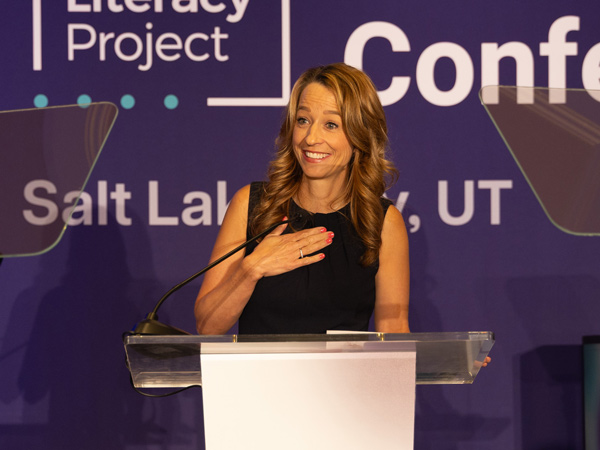
Cox told the audience how far Utah has come in supporting news literacy education and what that means for students, noting that, teachers “are putting trust back in the system.” Pierre Thomas, ABC News chief Justice correspondent and a longtime supporter of NLP, delivered the keynote and led a discussion featuring panelists from across education, journalism and government on the challenges facing the industry and news literacy. “News matters. What you’re doing matters. NLP is a stroke of pure genius.”
Closing keynote speaker Sharon McMahon, “America’s Government Teacher” and New York Times bestselling author, received a standing ovation for her powerful talk, Having Productive Conversations Across the Aisle: Truth, Civility, and Critical Thinking. She celebrated some of American history’s unsung heroes and explained how working with people who hold different beliefs and perspectives is essential to bringing about meaningful change.
“It was amazing to watch what we started building over two years ago come to life. I was excited to see so many champions of news literacy collaborating, networking and engaging with each other,” said Nierra Coleman Jones, NLP Senior Manager of Educator Engagement and lead conference organizer. “By the conclusion of the conference, I felt like we really reinvigorated the news literacy movement.”

National News Literacy Conference draws raves
The feedback from attendees was overwhelmingly positive. Journalist and educator Starshine Roshell said, “I’ve been to lots of conferences; I’m often bored by Day 2. But I can honestly say I wish this one had been longer! I wanted to attend every single session. Thank you for the work you do, and for organizing this spectacularly entertaining, informative, and useful event.” Comments in an anonymous post-conference survey echoed Roshell’s thoughts: “Truly one of the best conferences I have been to.”
Educators particularly valued the practical application of conference sessions and resources, including classroom-ready tools and new approaches to teaching news literacy education: “I was able to come back to my classroom on Monday and immediately implement what I learned. Great conference,” one educator told us.

Equipped to teach news literacy
Asked to name the tools, resources or ideas they would immediately use, dozens of educators cited Checkology®, the News Literacy Project’s digital learning hub; Daily Do Now slides; methods for teaching students how to research responsibly using AI, and how to instill healthy skepticism, avoid toxic cynicism and bring more nuance to media bias discussions.
Popular sessions included Digital Literacy in the AI Era, an interactive session designed to give educators the tools to help students make sense of the information that floods their screens; The Mirror Before the Microscope, which introduced a framework to give educators strategies to build bias awareness and deepen critical analysis, and Thinking Clearly in Turbulent Times, in which educators learned evidence-based techniques to reduce news consumption anxiety, combat pessimism and interrupt doomscrolling, all drawn from classroom experiences in Liverpool, England.
Photography by Devin Captures Photography for the News Literacy Project.