


Report: “Biased,” “Boring” and “Bad”: Unpacking perceptions of news media and journalism among U.S. teens

Among the findings: The majority of teens view news media negatively
About the study
This follow-up survey, which reconnected us with more than 750 respondents to our 2024 report News Literacy in America, sought to better understand the nature of teens’ distrust in the news media, including their understanding of how newsrooms work.
The report and its recommendations aim to inform educators, parents/guardians, policymakers and media professionals on ways they can foster healthy skepticism and avoid exacerbating harmful news media cynicism among teens. Equipped with a healthy skepticism, young people can more effectively hold the press (and other institutions) accountable, participate in civic life and protect themselves from misinformation, conspiracy theories and low-quality information sources.
Among the study findings

Attitudes toward news media:
( Key Finding )
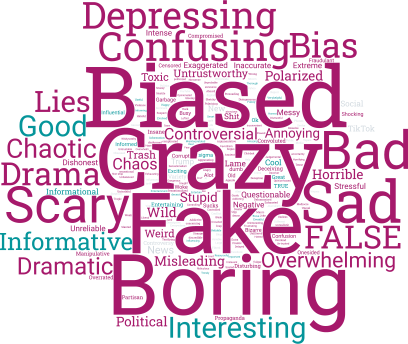
The majority of teens view news media negatively. An overwhelming majority of teens (84%) express a negative sentiment when asked what word best describes news media these days.
A majority of teens describe “news media” using negative words.
( Key Finding )
More teens believe journalists are skilled at lying and deceiving than informing the public. When asked to think of one thing they think journalists are doing well, roughly 1 in 3 teens (37%) offer negative feedback, saying things such as lying and deceiving (81 responses) or that journalists don’t do anything well (66 responses).
More than a third of teens offer negative feedback when asked what journalists are doing well
Note: Results based on 634 responses with enough detail to categorize.
Source: SSRS survey for the News Literacy Project conducted online from April 28 – May 12, 2025, with 756 teenagers ages 13-18 nationwide.
Perceptions of journalism practices
( Key Finding )
More teens believe professional journalists regularly engage in unethical behaviors than they believe journalists regularly engage in standards-based practices. For example, only 30% of teens believe journalists frequently confirm facts before reporting them. In comparison, half of teens (50%) believe that journalists frequently make up details, such as quotes, to make stories more interesting or engaging.
Perceptions of frequency of journalist actions, by type of action
% of teens who say that professional journalists and news organizations always, almost always or often…



Note: Items may not sum exactly to the NET values due to rounding.
Source: SSRS survey for the News Literacy Project conducted online from April 28 - May 12, 2025, with 756 teenagers ages 13-18 nationwide.
Journalism representations in popular culture
( Key Finding )
Most teens can’t think of any representations of journalism on screen but if they do, chances are it’s from Spider-Man. When asked if any movies or TV shows come to mind when they think of journalism, only about one-third of teens (32%) say “yes.”
For most teens, thinking about journalism doesn't bring to mind any TV shows or movies
% of teens who say that any movies or TV shows come to mind when they think of journalism
Source: SSRS survey for the News Literacy Project conducted online from April 28 - May 12, 2025, with 756 teenagers ages 13-18 nationwide.
Additional Resources
Unpacking perceptions of news media and journalism among U.S. teens (2025):
PDF [3 MB]
PDF [1 MB]
PDF [225 KB]
Newsroom
In the news
American Press Institute
Nieman Lab
Education Week
Columbia Journalism Review
CNN
The Newsworthy
Downloads
Zip file [1.3 MB]
Zip file [2.4 MB]