|
An inside look:
Power in Art

The start of a new year is an opportunity to introduce students to skills that will serve them in a rapidly shifting world. Editorial cartoons, with their blend of art and sharp commentary, are a compelling, creative way to teach critical thinking and media literacy (not to mention that the cartoonists behind them can make news themselves). The Checkology® lesson “Power in Art: The Watchdog Role of Editorial Cartoonists” helps students explore how visual storytelling can inform, provoke and inspire action.
Editorial cartoons communicate complex messages through symbols, caricatures and metaphors. By analyzing these works, students learn to unpack nuanced ideas, critique media bias and recognize stereotypes. These abilities help students navigate the constant flow of information they encounter, giving them a deeper understanding of how opinion journalism can inspire civic discourse.
Guided by celebrated cartoonist Lalo Alcaraz, the lesson connects the history of editorial cartoons to today’s memes and visual media. This approach shows students how the art form remains a relevant and evolving tool for civic engagement. It also encourages them to draw parallels between historical and modern methods of visual persuasion, making the material both accessible and meaningful.
One of the most engaging aspects of this topic is its creative potential. Students can design their own editorial cartoons to address school issues or global events, giving them a platform to voice their perspectives. This hands-on activity not only reinforces critical analysis but also empowers students to see art as a form of expression and advocacy.
|
|
|
Insider spotlight
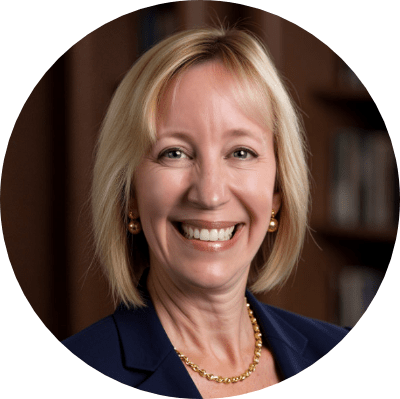
| Welcome to the Insider Spotlight section, where we feature real questions from our team and answers from educators who are making a difference teaching news literacy. This month, our featured educator is Cathy Collins from Boston, Massachusetts, where she is a library media specialist. |
 |
|
|
|
What's new?
⭐ New on Checkology!
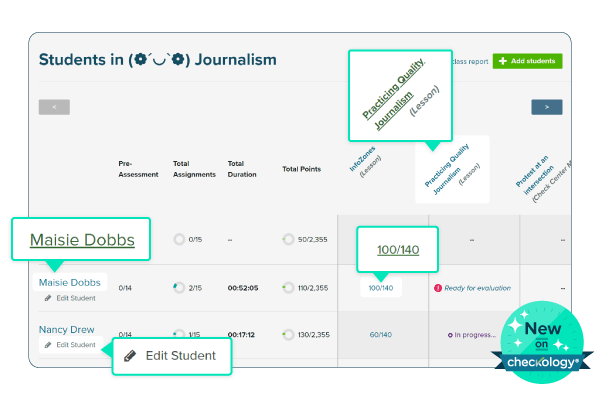
As we mentioned last month, we’ve updated Checkology’s gradebook functionality, in response to user requests. While the process for accessing and editing student assignments and individual grades hasn’t changed, the new gradebook’s design consolidates all this key information into a single, streamlined interface. This "one-stop shop" gives you easier access to detailed insights and saves you time! If you have questions about this update, please email us at checkologyhelp@newslit.org or submit a request via our Checkology Help Desk.
⭐ Be featured in our educator spotlight!
Are you using NLP’s resources to make a difference in your classroom? We want to hear from you! We’re looking for passionate educators to share their experiences and insights in our Educator Spotlight. Interested in being featured? Complete the form here: https://forms.gle/pvzQPix7kAPmgYQp6
|
|
|
NLP events for educators
|
???? Jan. 14 and Jan. 15:
????30-Minute Webinar: Preview Checkology
Have you heard of Checkology (or even registered for it) but you’re still not sure how to get started? This webinar is for you! Join us for an engaging free session led by NLP staff to learn more about Checkology’s foundational lessons in essential news literacy topics. You’ll come away with a plan for getting started on Checkology and with practical tips for integrating lessons into your curriculum. (Bonus: All attendees will be automatically entered into a drawing to win a care package of NLP goodies!) We’re holding multiple sessions of the same event, so pick the one that works best for your schedule.
|
|
???? Jan. 21, 1 p.m. ET/4 p.m. PT:
????Online workshop for grades 6-12 educators (Free)
Help students (and yourself) make sense of the generative artificial intelligence landscape. In this workshop for middle and high school educators, we’ll unpack KQED’s new guidelines for productive, ethical and student-focused media creation using GenAI. We’ll then explore how AI chatbots like ChatGPT can be customized to provide supportive feedback on audio and video scripts–and other types of writing. You’ll get plenty of hands-on time to practice and experiment, and you’ll leave with useful guidelines, instructional strategies, and ready-to-use resources. Register here.
|
|
???? Feb. 4, 5 p.m. ET/2 p.m. PT:
????Evaluating News Media Bias: A Nuanced Approach to a Vital Topic
Join us for National News Literacy Week! People frequently perceive and allege bias in news coverage, but what does this really mean? What makes a piece of news biased, and who decides? What role do our own biases play in our perceptions of bias? In this free edWebinar, we’ll help you teach this vital, controversial and complex topic in ways that empower students to meaningfully evaluate the fairness and impartiality of news coverage. Register here.
|
|
???? Feb. 6, 1 p.m. ET/10 a.m. PT:
????Hard hits, hidden truths: How investigative journalism tackled the NFL’s concussion problem
Join us for National News Literacy Week! Today, most of us know that a professional football player can sustain potentially devastating brain injuries after years of repeated high-impact collisions with other players. That awareness is due in large part to the reporting of investigative journalist Jeanne Marie Laskas, whose 2009 GQ magazine article, Game Brain, profiled scientists who had made a stunning discovery: Concussions in pro football players could lead to dementia. In this one-hour webinar, open to educators and their students and hosted by the News Literacy Project as part of National News Literacy Week, we will:
- Learn how Laskas conducted her reporting, despite resistance from the NFL.
- Learn about the watchdog role investigative journalists play in a democracy by documenting abuses by individuals, corporations and government entities.
- Explore free classroom resources for teaching about the watchdog role of a free press, including the “Democracy’s Watchdog” lesson on Checkology.
- Educators are welcome to join with or without their students. Register here.
|
|
???? Feb. 8, 10 a.m. – 6 p.m. ET/8 a.m.-3: p.m. MT:
????Boise State Writing Project & News Literacy Project
Hosted by the Boise State Writing Project and the News Literacy Project, this conference explores teaching our students how to differentiate fact from fiction, navigate society’s divisions, solve complex problems, and support their own and others’ well-being. Come to be inspired, share ideas and network with educators across the country. This conference will be held virtually. The $40 registration fee includes a conference ticket, access to all conference session materials, including session recordings, and your choice of an educational book related to the conference topics (that will be shipped to you). Register here. Questions? Please contact the conference coordinator, Jackie Miller (jackiemiller@boisestate.edu). You can attend for free by emailing Jwilhelm@boisestate.edu for a registration code (but you won't get a free book)!
|
|
|
|
|