

Misinformation about health — from diet fads to miracle “cures” — is common online and often shared on social media.
For students, encountering misleading claims on their feeds can heighten anxiety, erode trust or even lead to life-threatening actions.
But teaching news literacy skills like evaluating claims, understanding data, spotting bias and navigating algorithms and artificial intelligence can empower young people to resist harmful rumors and make confident decisions based on facts. News literacy education is about more than academics… it’s about supporting student mental health and wellness in the age of AI, and during a time when social media use is near ubiquitous among teens.
Being health informed with Checkology
In classrooms across the country, educators are using the Checkology® virtual classroom, the News Literacy Project’s free digital learning platform, to help students separate health facts from misinformation. Hear from teachers and teens who are bringing news literacy into science and health classes — giving students the tools to think critically, question sources and make informed choices about what they read, watch and share.

START HERE
Educators, power up your teaching with Checkology
Checkology is packed with free, standards-aligned, customizable resources to support educators as they help students avoid falling for dangerous health misinformation. Securely sign in via Clever, Google or Microsoft (or using your own username and password, if your school does not use one of these options) and get started today!
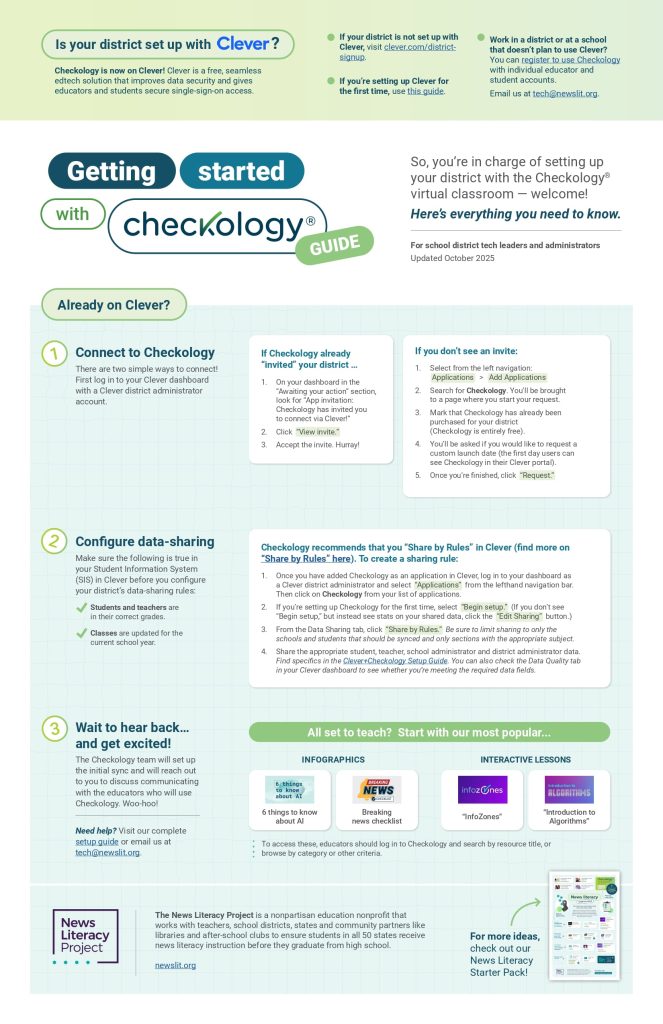
Are you an administrator? Download our Getting Started with Checkology Guide to set up Checkology for your school or district.

Our planner: Brain Gains
Our “Brain Gains” planner, themed around the weekly “exercises” students can do to strengthen their ability to spot health and science misinformation and identify credible sources, is a downloadable tool you can save, print and share.
Each week includes one interactive lesson and one poster, infographic or other printable tool (some weeks have bonus activities, too). Choose the themes that best fit with your curriculum – or assign them all.
It’s easy to access everything shown here once you’re logged in to Checkology. Simply search for “brain gains” to see the full list of resources.
Week-by-week: Lessons and activities








Events
Save time, deepen your own knowledge and gain confidence in helping students build news literacy skills that will serve them throughout their lifetime.
For administrators
Tuesday, Oct. 28
5 p.m. ET/2 p.m. PT
Building Resilient Students: Addressing Health and Science Misinformation Through District and Community Partnerships
Toggle for event details
In our age of AI and algorithms, students encounter misleading health content at an alarming rate. But strong partnerships between districts, schools, families and medical professionals can help to prevent this impact.
Join Karen Kelsall-Lagola of Beverly Hills Unified School District (CA); Eli Cahan of Stanford University and Rolling Stone, and NLP’s Brittney Smith and Elliott Goodman for an edLeader panel discussion about the dangers posed to students by health misinformation, and the actions that school leaders can take to help students recognize and spot falsehoods.
For educators
Wednesday, Nov. 5
4-4:30 p.m. ET/1-1:30 p.m. PT
Thursday, Nov. 6
7-7:30 p.m. ET/4-4:30 p.m. PT
Preview Checkology: Your News Literacy Hub
Toggle for event details
Join us for an engaging 30-minute webinar to learn more about Checkology’s foundational lessons in essential news literacy topics and understand how to get started with the platform. Plus, learn what’s new for the 2025-26 school year!
The content of these sessions is the same – choose the date that best fits your schedule.
Get started
Whether you’re assigning each bundle or you’re simply exploring new ideas for your class, school or district, this is a meaningful chance to help your students develop news literacy skills to support their mental health and wellness. Get started now:
- Sign up for an event to learn more about our resources.
- Download a resource:
- Administrators: Download the Getting Started with Checkology Guide and make sure your district is set up for success with Checkology via Clever with secure single sign-on access.
- Educators: Talk with your district administrator about adding Checkology on Clever for your school or district. Download the Planner, log in to Checkology and search “brain gains” to get started with the lessons and resources.
Not an educator? Subscribe to Scroll Smarter, our free monthly newsletter that helps families understand and navigate today’s information landscape.
Real classrooms. Real impact.
Learn more about the District Fellowship program, a chance to explore how news literacy skills can benefit students across subjects and disciplines, including health and science educators across the U.S.

Educators in North Salem, N.Y., include news and media literacy as part of their health curriculum. The district uses resources found on the Checkology virtual classroom. North Salem students have developed “habits of healthy skepticism when scrolling their feeds by asking: Who’s behind this information?”
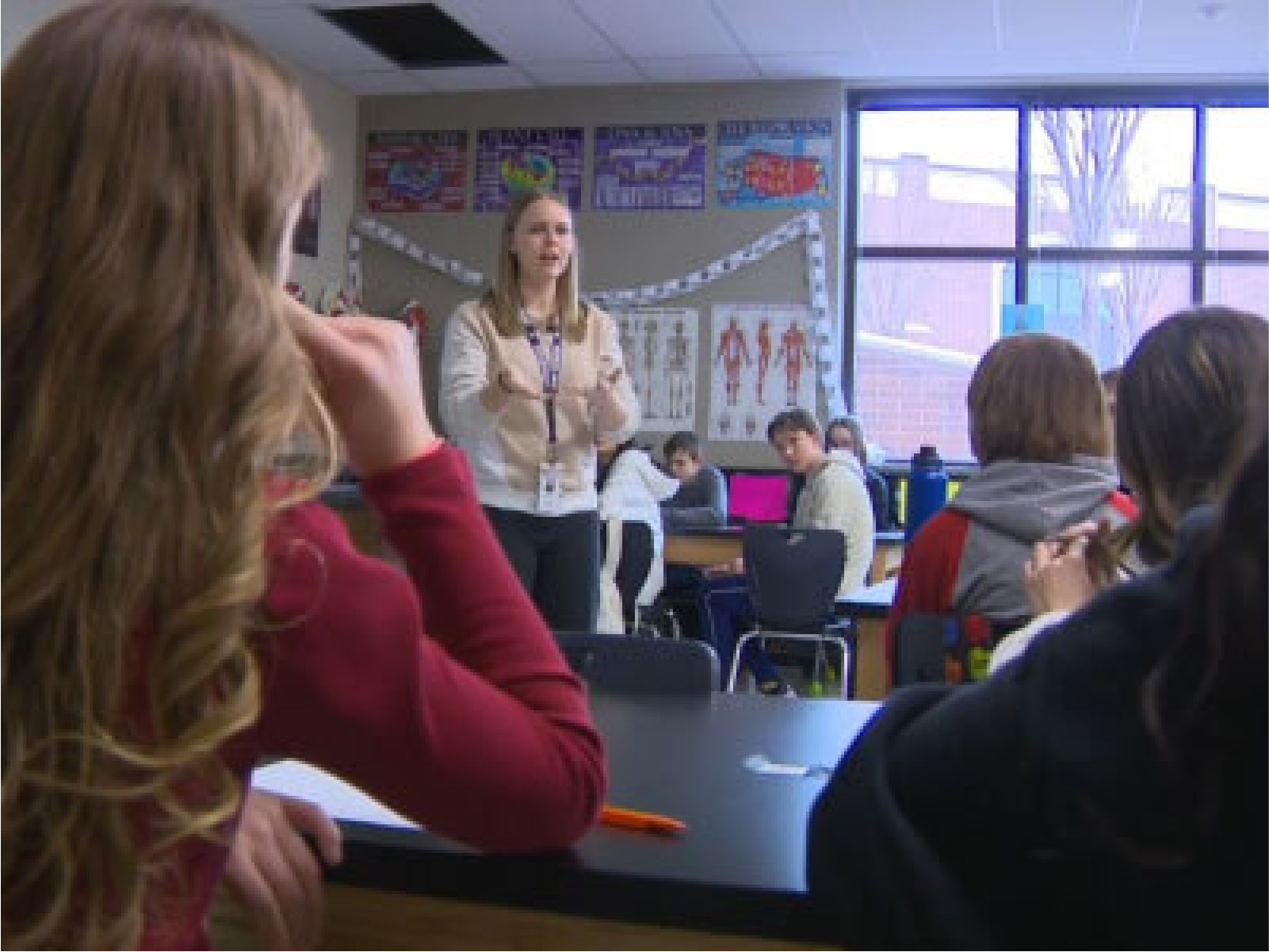
In Utah’s Canyons School District, students use critical thinking and news literacy skills to critically analyze health claims and other content they see online. “I think it’s important they differentiate between what’s credible and what isn’t,” said Lacee Kendall, a biology teacher in the district. “They can make informed decisions throughout their life.”