How student journalists put news literacy into action
Recent research from the News Literacy Project found a majority of teens deeply distrust the news media and cling to negative misconceptions about journalism, and that came as no surprise to student journalists in Weirton, West Virginia.
“I can understand that, especially because some kids don’t understand what’s journalism and what’s just someone talking,” said Hailey Hans, a senior at Weir High School. “There’s so much false information out there, and whatever they’re fed, they really believe. I think that’s hard for some kids to grasp.”
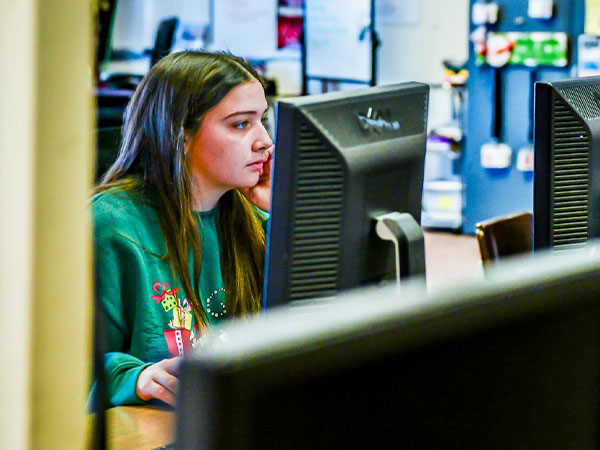

Hans, fellow senior Lily Rocknich and sophomore classmate Lilliana Trupiano agreed it doesn’t have to be this way. And, no, they aren’t naive. They are educated.
All three are studying journalism and media literacy and appreciate how much better they are at navigating information online than many of their peers. “I thought I was media-literate, but when I joined the [media literacy] class, I realized I’m not. It made me realize how you can be made to think things are true that are not true,” Trupiano said.
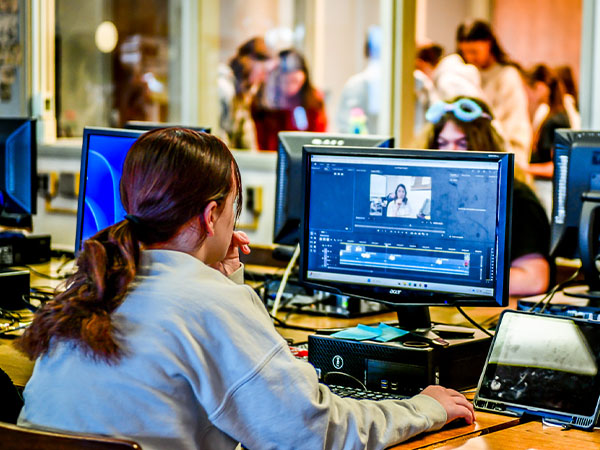
The students apply what they’ve learned as reporters, writers and videographers for the school’s news website, yearbook and morning announcements programming. “I love having a voice and telling stories that are important to me and our staff,” Rocknich said.
Changing their own behavior online
They also appreciate how news literacy skills have changed how they engage with news and other content online.
“Social media just kind of throws out things, so it’s important to get someone’s real word, to know what’s right and what’s wrong,” Rocknich said.
That means pausing to consider the information and the source before sharing and understanding what responsible social media engagement looks like.
“It’s made me take a step back and look deeply into what I’m consuming. I’ve been doing this since my freshman year, and I’m still learning so much,” Hans said. “I have good ethics, but every time I go into class, they grow stronger.”
Rocknich said she has gained a healthy skepticism that makes her more cautious online. “When I was younger, some weird people would follow me or add me on Snapchat, and I would just add everyone and think, ‘Okay, why not?’”
They also understand the perks and pitfalls of artificial intelligence. “We need to use AI as a tool and not as a cheat,” Hans said. “I’m a bad speller, so I use it to help me spell, but you have to make sure you’re using it in a responsible way.”
Trupiano said she hadn’t given AI much thought before studying news literacy, but now she recognizes how difficult it is to avoid seeing it, and she warns her mom about photos manipulated with AI. “You have to know what you’re putting out there.”
Joining the District Fellowship program
The students’ teacher, Morgan Bricker, who uses News Literacy Project resources in the classroom — including the Checkology® virtual classroom and The Sift® newsletter — believes students throughout Hancock County Schools should have the same opportunities her school’s students have. That’s why she applied to the News Literacy Project’s District Fellowship program last spring and now leads her district’s initiative.
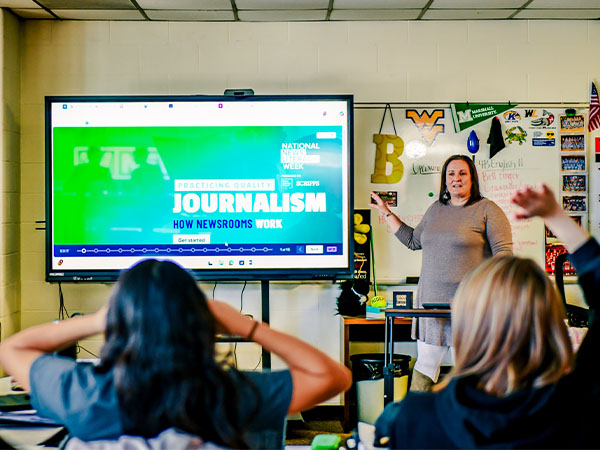

“Our primary goal is to implement news and media literacy for students in grades K-12,” Bricker said. “Every student in the country deserves the same journalism and news literacy instruction as well as press protections, and our work isn’t done until all 50 states ensure them.”
She and her students, including Hans, have been instrumental in helping to advance press freedom rights for student journalists in the state. Bricker is the West Virginia State Director for the Journalism Education Association and blog coordinator for its Student Press Rights Committee. She also supported her students’ multi-year effort to help pass West Virginia’s Student Journalist Press Freedom Protection Act in March 2023. This win made West Virginia the 17th state to enact such legislation.
Making a difference in their state
And the students’ efforts have garnered attention. Weir High School won the First Amendment Press Freedom Award from the Journalism Education Association, the National Scholastic Press Association and Quill and Scroll International Honor Society for Student Journalists in 2024 and 2025. “To have their hard work recognized on a national level was an amazing experience for my students,” Bricker said.
The teens’ experiences in the classroom and in the world, have convinced them that news literacy should be required teaching.
“There are classes in high school, but they don’t have them in middle school, and younger people especially need it right now,” Trupiano said.
Hans added: “I think 100 percent it should be taught in every school so we’re not creating this world where fake information is the norm or our world’s going to be more broken than it already is.”