
Insider Spotlight: Kori Green
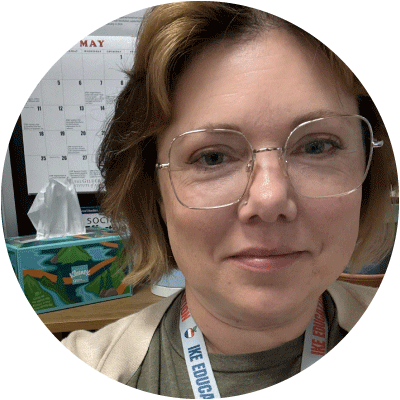
Welcome to the Insider Spotlight, where we feature real questions from our team and answers from educators who are making a difference teaching news literacy. This month, our featured educator is Kori Green, a high school history teacher in Wichita, Kansas.
Q: How do news literacy skills apply or connect to your history lessons?
A: The most obvious connection is the sensationalized “yellow journalism” at the turn of the 20th century, a topic that I’m currently in for my U.S. History class. Sometimes connecting today’s clickbait to yesterday’s headlines isn’t a big leap, unfortunately, but it makes for relevant lessons for my students.
Q: Do you face any challenges when teaching news literacy skills to high school students? How do you overcome those challenges?
A: The biggest roadblock we hit up front is where the students are starting from. My colleagues and I grew up as “news seekers,” but today’s students are “news receivers.” The majority don’t listen to a regular newscast or read an article on their own; they’re getting it in their feed through other means. News Literacy Project lessons have helped me find them where they’re at.
Q: One important news literacy skill is the ability to distinguish between different types of information, like news, opinion or propaganda. What do you teach students to look for when they analyze the purpose of different historical documents?
A: Sourcing, contextualization and corroboration are key to understanding both a historical document and a news story. I can get students to key in the most when a document is using words that are making them “feel some kinda way.” Loaded language should get their historical Spidey senses tingling.
Q: Which resources from the News Literacy Project have helped you incorporate news literacy into your classroom plans?
A: I really like the Daily Do Now slides. We have a new elective this year called Contemporary Issues, and those questions and the examples provided have been a great way to get students to think more deeply about what comes across their feeds.
Q: Finally, is there something outside of teaching, like a hobby or interest, that helps you stay grounded?
A: The big ones are reading and traveling. Reading lets you turn off the spigot of information that’s so easy to drown in (I actually put one of those apps on my phone that prevents me from doom scrolling during certain hours). I love travel because you get to meet new people and interact with new cultures to learn how they might approach things differently. And as a history teacher, I’ve never met a museum or a museum shop I didn’t love.