


The Sift: Getting the story right


An educator's guide
to news literacy
Oct. 26, 2026
In this issue
Getting the story right | RumorGuard slides

Daily Do Now slides
A week’s worth of do-nows, just for you.
➡️ To access News Literacy Project resources linked in today's newsletter, sign up for a FREE Checkology® account.
Top picks
Here are the latest news literacy topics and tips on how to integrate them into your classroom.

For news stories to be credible, journalists follow ethical standards.
1. Getting the story right
Who makes sure journalism ethics are followed in standards-based newsrooms? It’s often a team effort involving reporters, editors and, at some news organizations, usually larger ones, a dedicated standards editor.
- Checking credibility: The Wall Street Journal has an entire Standards and Ethics team that reviews complicated, investigative stories before publishing. It checks how credible the information is, according to Elena Cherney, head of Standards and Ethics at the Journal.
- Many checkpoints: The team asks about sources, who the reporter interviewed, questions the reporter asked and documents they reviewed, Cherney said. The newspaper prefers sources to be on the record, which means information is attributed directly to a named source. If reporters include unnamed or anonymous sources, the article should offer details to explain how these sources know the information they’re providing.
- “No surprises”: Like other standards-based newsrooms, the Journal seeks comment from everybody involved in a story and checks for inaccuracies. “We call this process ‘no surprises,’ and doing it well is a critical part of making sure that our stories are fair and accurate even if the answer is ‘no comment,’” Cherney said.
💬 Discuss:
- Why do you think some sources are unnamed in investigative news reports? Why would some individuals be concerned about being identified for providing information to journalists?
- How do the questions asked by the Journal’s Standards and Ethics team help ensure information published by the newspaper is credible?
- What evidence can you look for to check whether a news organization aspires to journalism standards? How could these standards also be used to evaluate the credibility of other types of information?
⭐ NLP Resources:
- Poster: “Seven standards of quality journalism”
- Interactive lesson: “Practicing Quality Journalism”
🔗 Related:
- “How We Draw Lines in a World Awash in A.I. Images” (The New York Times)
2. A surge of AI content in Brazil’s elections
There are strict regulations against election disinformation in Brazil, but the sharp influx of AI-generated content leading up to the Oct. 25 presidential election tested these rules and made them challenging to enforce.
- AI election videos: Some AI videos were for amusement, such as TikTok posts of the two presidential candidates dancing together. But other videos amplified misleading information, like posts featuring fake polls or AI-generated “voters” criticizing candidates in clips that resemble news reports.
- Regulating platforms: Brazil’s laws prohibit deepfakes in election advertising campaigns and require social media platforms to remove posts that contain election falsehoods. Authorities are struggling to keep up with the sheer volume of content, and experts say platforms aren’t consistently enforcing the rules.
- Voters on AI: Brazil has a population of 214 million and its people rank among the most active social media users in the world. About 56% of Brazilians say they trust AI, which experts say could make voters more susceptible to AI-generated posts.
💬 Discuss:
- What impact does election disinformation have on voters in a democracy?
- Who should moderate election disinformation online? Tech companies? The government? Someone else?
- How can countries like Brazil balance AI regulations with concerns about free speech?
⭐ NLP Resources:
- Infographic: “6 things to know about AI”
- Interactive lesson: “Introduction to Algorithms”
🔗 Related:
3. Health influencer promotes unproven remedies
A reporter from The Guardian recently went undercover at a wellness event in Cheshire, England, and watched an influencer share what experts say are false health claims with a receptive audience.
- Dangerous advice: Australian influencer Barbara O’Neill recommended a castor oil compress to treat a tumor and claimed antibiotics are “the worst thing” for infections. Medical professionals say these claims are false and, in some cases, dangerous.
- Large following: O’Neill also spreads unproven health advice on social media, where she has over 5 million followers across platforms. She was banned from providing health services in Australia because authorities said her claims posed a public safety risk.
💡Idea: See the “Health claims” slide from Week 8 of the Daily Do Now resource to further explore this topic.
💬 Discuss:
- How do you know if health advice on social media is credible? What are some steps you can take to verify health claims?
- Why do some people trust false health claims or remedies?
- Undercover reporting in modern journalism is relatively uncommon, with the Society of Professional Journalists’ Code of Ethics advising journalists to “avoid undercover or other surreptitious methods of gathering information unless open methods will not yield information vital to the public.” Why would a news outlet send a journalist undercover to a wellness event like this? What could the reporter learn firsthand that might not have emerged through interviews or online research?
⭐ NLP Resources:
- Interactive lesson: “Be Health Informed”
- Infographic: “Levels of scientific evidence”
- “Sift quiz: Wellness & science claims”
🗒️ Note: For more news literacy resources on teaching health and wellness topics, including a week-by-week planner, check out newslit.org/wellness.
🔗 Related:
- “Dying Patients Are Inundated by Misinformation. My Dad Was One of Them.” (The New York Times)


These interactive slide decks help students think carefully and critically about viral claims in the digital age.
AI-generated grocery receipts exaggerate price increases

❌ NO: This post does not include genuine photographs of receipts from a Walmart store in Florida.
✅ YES: This is an AI-generated image.
❌ NO: The prices on these receipts don’t accurately reflect the actual price increases over the last 24 years for the items listed in the receipts.
✅ YES: Some social media users are posting genuine photographs of their old receipts showing how grocery prices have gone up over the past few decades.
⭐ NewsLit takeaway:
Genuine photographs of old receipts have circulated widely online to highlight the rising cost of living. As these posts have generated a lot of attention, it isn’t surprising that engagement bait accounts are now fabricating their own AI-generated versions of these posts and exaggerating the increases to capture some of that traffic. Check out these Google Slides for tips to spot these convincing falsehoods.
AI video falsely shows Eiffel Tower burning during protests in France

❌ NO: This is not an authentic video of the Eiffel Tower collapsing in flames during recent protests in France.
✅ YES: This is an AI-generated video.
⭐ NewsLit takeaway:
During a breaking news event, especially one that involves dramatic scenes, purveyors of misinformation often create and spread fabricated and misleading content to capitalize on the attention and generate traffic. Check out these Google Slides for tips on spotting this manipulative media.

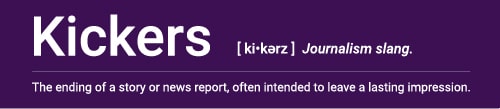
➕ News organizations traditionally compete to get a story first, but shrinking newsrooms in Alaska are taking a different path: collaboration. They’re working together on voter guides, republishing each other’s stories and sharing resources ahead of the closely watched midterm elections.
➕ Fourth and fifth graders at an Illinois elementary school are tackling a big topic in their next edition: the proposed closure of their school. “They are not passive observers,” one parent noted.
➕ Earworm, or AI slop? Spotify said it has removed 50 million AI-generated tracks from its streaming platform this year and updated its recommendation system “to remove slop and spam, and surface more music made by authentic, human artists.”
➕ Online marketplace Etsy is also cracking down on AI slop. Sellers are now required to include at least one unedited photo in listings and to disclose AI-generated artwork.
➕ The insect photo appeared to show an entirely new species of mantis. The problem? It was AI-generated — part of a growing problem inundating citizen science forums and scientific journals.
➕ When public officials use derogatory or racist language, journalists think carefully about when or if to include such terms in a news story. One recent test: U.S. Supreme Court Justice Clarence Thomas used the term “illegal aliens” in a court ruling, and newsrooms had to weigh how to approach this phrase in news coverage.
⭐NLP Resource: See the “From the copy desk” slide from Week 8 of the Daily Do Now resource for a short video and classroom discussion questions on this topic.
How do you like this newsletter?

Thanks for reading!
Your weekly issue of The Sift is created by Susan Minichiello, Dan Evon, Peter Adams, Hannah Covington and Pamela Brunskill. It is edited by Lourdes Venard and Mary Kane.
You’ll find teachable moments from our previous issues in the archives. Send your suggestions and success stories to thesift@newslit.org.
Did someone forward you this newsletter? Subscribe to receive this newsletter in your inbox every Monday.
Check out NLP's Checkology virtual classroom, where students learn how to navigate today’s information landscape by developing news literacy skills.