
The Sift: Press freedom rankings drop


An educator's guide
to news literacy
May 4, 2026
Please share your opinion on The Sift in this survey. At the end you can enter to win one of 15 $100 Amazon gift cards. ☺️
In this issue
Press freedom rankings drop | RumorGuard slides

Daily Do Now slides
A week’s worth of do-nows, just for you.

Top picks
Here are the latest news literacy topics and tips on how to integrate them into your classroom.

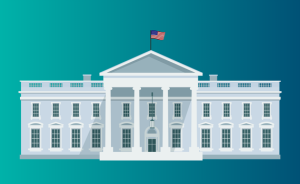
The United States’ global press freedom ranking fell seven places — from 57th in the world to 64th — over the last year.
1. Global press freedom at historic low
Press freedom has declined to its lowest level since Reporters Without Borders (RSF) began tracking it 25 years ago.
- Big decline: In its annual World Press Freedom Index of 180 countries and territories, RSF found that the average score of all countries was at its lowest point since the organization started rating and tracking press freedom in 2001. Press freedom scores have declined in 100 countries, and less than 1% of the world’s population now lives in a country where the degree of press freedom is considered “good” — down from 20% in 2002.
- U.S. ranking: The United States (ranked 64) had a big drop this year — down seven spots on the index compared with last year. RSF cited the rhetoric and policies of the Trump administration as the primary cause for the drop.
- Why it matters: Freedom of the press is an essential part of a robust democracy, allowing journalism to expose and deter corruption and abuses of power. World Press Freedom Day was celebrated on May 3.
- Best and worst rankings: Norway (1), Netherlands (2), Estonia (3) and Denmark (4) were the highest-ranking countries. Iran (177), China (178), North Korea (179) and Eritrea (180) were the lowest.
💡 Idea: Ask students to guess which countries rank highest and lowest on the 2026 World Press Freedom Index, then reveal the answers. What surprised them? What didn’t? Have students review the map and encourage them to click on different countries to see rankings. Then discuss the following questions.
💬 Discuss:
- What kinds of things diminish press freedom?
- What kinds of things strengthen press freedom?
- How does RSF measure press freedom?
- What is the connection between the strength of press freedom and the strength of democracy?
💡 Another idea: Individually or in groups, assign students a country to evaluate in terms of its press freedom. Ask them to explore different factors that determine freedom of the press, such as: 1) legal protections for the press, 2) risks of journalists being threatened, jailed or physically harmed for their work and 3) economic pressures on media outlets. Have students share what they found with the class.
⭐ NLP Resources:
- “Press freedom collection — Daily Do Now slides”
- “Press Freedoms Around the World” (Checkology® virtual classroom)
- “Teaching about freedom of the press”
🗒️ Note: For a 5-minute classroom activity, don’t miss the “Press freedom” slides in Week 23 of the Daily Do Now resource.
🔗 Related:
2. Conspiracy theories spread after shooting
The planned theme of this year’s White House Correspondents’ Dinner on April 25 was the First Amendment, but what emerged instead were conspiracy theories.
- What happened: Shots were fired after an armed gunman charged through the security checkpoint at the Washington, D.C., event, prompting an emergency evacuation before the man was arrested. Many of the journalists in attendance immediately started to report the story once it was safe to do so. More details are still unfolding.
- What’s spreading: In the aftermath, conspiracy theories alleging that the shooting was staged flooded social media, many claiming it was orchestrated to drum up support for a ballroom under construction at the White House. Some drew parallels with the assassination attempt on President Donald Trump in Pennsylvania in 2024.
- Facts reported: Since there were many journalists at this event, there was an abundance of reporting from the scene — but that didn’t stop misinformation from spreading. Emily Vraga, a news literacy and misinformation expert, noted that in polarizing times more information can simply give people more details to selectively choose and assemble into their own narratives.
🗒️ Note: Vraga has worked on a freelance basis for the News Literacy Project.
💬 Discuss:
- Why do conspiracy theories spread in the immediate aftermath of violent or crisis situations?
- Did political polarization contribute to conspiracy theories forming about this event?
- Why is verified information usually slower to emerge than speculation, rumors and conspiracy theories in situations like these? What aspects of producing accurate, high-quality information takes time?
⭐ NLP Resources:
- Infographic: “Breaking news checklist”
- “Conspiratorial Thinking” (Checkology)
🔗 Related:
- Opinion: “A radical reimagining of the White House correspondents’ dinner” (American Crisis, Margaret Sullivan’s Substack newsletter)
- “Friendly AI chatbots more likely to support conspiracy theories, study finds” (The Guardian)
3. Teens have doubts about influencers
Although most teens primarily get information about current issues and events from social media, many of those surveyed say they feel skeptical about it.
- Influencers are popular: Despite some differences in their information diets, adults and teens alike are turning to influencers or creators — although teens (81%) are engaging with influencers most frequently, according to a Media Insight Project study.
- AI chatbots are less popular: About 2 in 10 teens say they learn about news from AI chatbots, and 4 in 10 say they get news from a search engine.
- Skeptical about influencers, AI: Just 12% of teens say they have a “great deal of confidence” in information coming from influencers, and only 11% say they have a “high level of certainty” about information from AI.
- Most trusted source: Local newsrooms are viewed as the most trustworthy sources of news across generations.
💬 Discuss:
- How are influencers and journalists different? How are they alike?
- What are the differences between consuming actual news reporting (journalism) and consuming content about current events that isn’t journalism?
- How can you tell what counts as actual journalism (news reporting) and other kinds of content about current events?
- Why do you think study participants viewed local news as the most trustworthy information source?
💡 Idea: Ask students to keep track of where and how they learn about current issues and events for a period of time. Then have them discuss the findings from these information audits in small groups. Using NLP's poster “The Information Ecosystem Depends on News,” have groups discuss what portion of their examples and sources were actual standards-based news reporting and what portion was content about current events (or content about news). Then have groups discuss the differences between news and content about news and share back.
🗒️ Note: For findings on teens’ view of news media, see NLP’s 2025 survey.
⭐ NLP Resources:
- Slides: “Classroom activity: Is it news?”
- Infographic: “Seven Steps for Staying Sharp Online”
🔗 Related:
- “Teens’ Experiences on TikTok, Instagram and Snapchat” (Pew Research Center)


These interactive slide decks help students think carefully and critically about viral claims in the digital age.
Viral ‘Squirrel vs. Waymo’ video is AI-generated

❌ NO: This is not an authentic video of a squirrel spinning on top of a Waymo car’s Light Detection and Ranging (LiDAR) sensor, a system that creates a 360-degree map of the vehicle’s surroundings.
✅ YES: This video is AI-generated.
⭐ NewsLit takeaway:
While AI tools can create realistic content, there are still several ways to detect convincing fakes. Check out these Google Slides for a few tips to spot AI videos online.
Kid Rock didn’t address Pentagon officials on Strait of Hormuz during visit

✅ YES: This is a genuine photograph of musician Kid Rock speaking to military service members and officials in the Pentagon’s press briefing room during an April visit.
❌ NO: Kid Rock was not giving an official address with vital military information regarding the Iran war and the Strait of Hormuz, a major shipping route that was effectively closed by Iran after it was attacked by the U.S. and Israel in February.
✅ YES: Kid Rock, whose real name is Robert James Ritchie, met with service members and filmed videos during a visit to promote America’s 250th anniversary celebrations and his Freedom 250 Tour.
✅ YES: This rumor started as a joke on a partisan account.
⭐ NewsLit takeaway:
Sharing a genuine video or photograph along with an inaccurate or misleading description is a common tactic used to spread falsehoods online. Check out these Google Slides for a few tips to spot these false context claims.

➕ To cover New York City politics and government, one New York Times reporter relies on a network of sources she built over two decades, her experience covering small-town news and her instincts for a good scoop.
➕ Beware of phony TikTok “rewards” programs that feature AI-generated videos of celebrities like Rihanna and Taylor Swift — they’re scams. To counter fakes like these, Swift recently applied to trademark her voice and image.
➕ About one-third of new websites published since 2022 are AI-generated, which one researcher said marks a “major transformation of the digital landscape.”
➕ More anonymity requests granted. More safety training. More vigilance in carrying government-issued IDs. These are some of the ways student journalists have responded to threats of violence and deportation.
➕ Misinformation about attention-deficit/hyperactivity disorder and autism is common on social media — and is falsely convincing some teens that they have these conditions, according to a recent study.
How do you like this newsletter?

Thanks for reading!
Your weekly issue of The Sift is created by Susan Minichiello, Dan Evon, Peter Adams, Hannah Covington and Pamela Brunskill. It is edited by Lourdes Venard and Mary Kane.
You’ll find teachable moments from our previous issues in the archives. Send your suggestions and success stories to thesift@newslit.org.
Did someone forward you this newsletter? Subscribe to receive this newsletter in your inbox every Monday.
Check out NLP's Checkology virtual classroom, where students learn how to navigate today’s information landscape by developing news literacy skills.