
The Sift: Pulitzers: Best in journalism


An educator's guide
to news literacy
May 11, 2026
Please share your opinion on The Sift in this survey. At the end you can enter to win one of 15 $100 Amazon gift cards. 🎁
In this issue
Pulitzers: Best in journalism | RumorGuard slides

Daily Do Now slides
A week’s worth of do-nows, just for you.

Top picks
Here are the latest news literacy topics and tips on how to integrate them into your classroom.

The Pulitzer Prize is considered the highest honor in American journalism.
1. Pulitzer Prizes celebrate best in journalism
As important as it is to teach students to be discerning, critical consumers of news, it’s also important to help them understand what exemplary journalism looks like. The Pulitzer Prizes offer a showcase of the important role that quality journalism plays in American society.
This year’s winners were announced May 4 and included:
- Public Service: The Washington Post’s news coverage of the Trump administration’s overhaul of federal agencies won the most prestigious category: Public Service. (The winner of this category receives the Pulitzer Prize Gold Medal.)
- Special citation: In a rare move, a special citation was given for reporting published nearly a decade ago. Miami Herald investigative journalist Julie K. Brown was recognized for her 2017 and 2018 reporting exposing sex trafficker Jeffrey Epstein’s systemic abuse — leading to his 2019 arrest. The citation noted: “Her work, and the release of the government’s Epstein files, continue to reverberate around the world.”
- Graphic novel: “TrAPPed” is an investigative piece about a neurologist in India who was deceived into believing he was under “digital arrest” by authorities — part of a scam designed to extort money from innocent people. This reporting took the unique form of a graphic novel and won the Illustrated Reporting and Commentary category.
- Two new categories were introduced this year: Beat Reporting and Opinion Writing. Two Reuters journalists won for their beat reporting on Meta. A New York Times opinion columnist won for essays on rising authoritarian regimes.
- Personal story: Texas Monthly won its first Pulitzer Prize this year. Senior editor Aaron Parsley’s first-person account of last year’s devastating floods in Texas, which included the loss of his baby nephew, won in the Feature Writing category.
💬 Discuss:
- Think about the way people generally talk about “the media” — and then look through this year’s Pulitzer Prize winners. What do you notice? What questions does this comparison inspire? What kinds of things diminish press freedom?
- Consider the impact that this year’s winners and finalists had and explain why people sometimes refer to the press as a “watchdog.”
- The Public Service category is considered the most prestigious of the Pulitzer Prizes for journalism. Why do you think this is?
💡 Idea: Divide students into groups and assign each an article to read from this year’s list of journalism Pulitzer Prize winners and finalists. Ask students to describe what makes the article an exemplary piece of journalism. For a more in-depth conversation, have students use the Dig Deeper think sheet, “Pulitzer Prizes for journalism: What makes a piece worthy of a Pulitzer Prize?” Ask students in each group to share their thoughts on the impact of the piece or series they chose.
💡 Another idea: See the “Quality journalism” slide in Week 24 of the Daily Do Now resource for a 5- to 10-minute classroom activity.
⭐ NLP Resources:
- “Democracy’s watchdog” (Checkology® virtual classroom)
- “Power in Art: The Watchdog Role of Editorial Cartoonists” (Checkology)
- Poster: “Seven standards of quality journalism”
🔗 Related:
- “WKU student contributes to Pulitzer-winning coverage” (Bowling Green Daily News)
2. From government raid to Pulitzer win
Earlier this year, the FBI raided Washington Post reporter Hannah Natanson’s home. Now she’s won a Pulitzer.
- Hard work: Natanson wrote more than 200 articles last year, including a first-person essay in which she shared her experience of having 1,169 current and former government sources reach out to her after she posted her contact information in a subreddit for federal workers.
- FBI raid: In an unusual move, the FBI later raided her home and seized her phone, two computers, a hard drive and other devices, citing her essay as justification as it investigated an alleged leak of classified documents. However, in two separate rulings, the courts have blocked the Justice Department from analyzing the data, though it is still holding it.
- Pulitzer win: Natanson’s work was part of The Post’s Pulitzer Prize win in the distinguished Public Service category this year. In a celebratory speech after the win, she said: “To every government worker who risked so much to confide in me, I want you to know your trust is the highest honor I will ever receive.”
💬 Discuss:
- Should journalists be able to receive tips and leaks from government sources, even when that information is potentially sensitive or classified?
- How could leaked information from a government worker help protect the public’s interest?
- What risks do investigative journalists take when they investigate powerful people?
- Who ultimately holds organizations and individuals accountable for wrongdoing exposed by journalists?
🗒️ Note: For more teaching ideas on this topic, see the Jan. 26 issue of The Sift about the FBI raid on Natanson’s home. Last week’s issue about the decline of global press freedoms also has ideas.
⭐ NLP Resources:
- “Daily Do Now: Press Freedom Collection”
- “Press Freedoms Around the World” (Checkology)
- Poster: “The First Amendment”
🔗 Related:
- Q&A with Natanson: “A Tip Line, a Crackdown, and a Chilling Effect” (Nieman Reports)


These interactive slide decks help students think carefully and critically about viral claims in the digital age.
AI images falsely depict meeting spots where three states converge

✅ YES: This is an AI-generated image.
❌ NO: North Carolina, South Carolina and Tennessee don’t all share the same border.
✅ YES: AI-generated images depicting the supposed spots where other states meet are also circulating online.
⭐ NewsLit takeaway:
Interesting trivia, cool images or other intriguing content are frequently used by social media accounts to generate engagement. Many accounts even use AI-generated content or misleading information to boost their audience. Check out these Google Slides for more tips on spotting engagement bait.
No, Trump didn’t suggest driving downhill to save gas money

❌ NO: President Donald Trump did not suggest driving downhill to save on gas because “gravity is FREE energy.”
✅ YES: This is a piece of impostor content.
✅ YES: Gas prices have increased by 50% since the start of the Iran war in February 2026.
⭐ NewsLit takeaway:
One way to spread falsehoods online is to disguise them to make them appear as if they originated with an official source. While this post may look like it was taken from Trump’s X account (it bears his handle and a blue check mark), this message was never shared on his timeline. Check out these Google Slides for tips to spot this sort of impostor content.

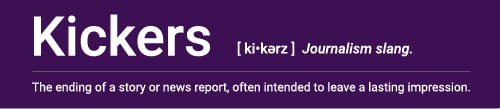
➕ As the Federal Communications Commission pursues “equal time” rule enforcement against the talk show The View, ABC argues that revoking the exemption it’s had since 2002 violates the First Amendment.
➕ A NewsGuard poll tested Americans’ radar for viral rumors by asking respondents to label three claims as “true,” “false” or “unsure.” They found that 43% of respondents believed at least one claim, double the amount from the last poll in December.
➕ Four in 10 Americans get information about health and wellness issues from influencers — but who are these people? According to Pew Research Center, only 41% of the influencers self-identify as healthcare professionals.
➕ Whether it’s a social media detox or trying out dumbphones, some Gen Zers are trying to get off of social media — and a study shows declines in social media posting between 2020 and 2024.
➕ Vine is back! Well, sort of. A new and similar app called Divine encourages users to make their own videos. The platform has banned AI and aims to have videos made by humans.
➕ Gibberish. Cliches. Made-up characters. That’s what listeners hear in some AI-generated podcasts, which accounted for 39% of all podcasts created recently.
How do you like this newsletter?

Thanks for reading!
Your weekly issue of The Sift is created by Susan Minichiello, Dan Evon, Peter Adams, Hannah Covington and Pamela Brunskill. It is edited by Lourdes Venard and Mary Kane.
You’ll find teachable moments from our previous issues in the archives. Send your suggestions and success stories to thesift@newslit.org.
Did someone forward you this newsletter? Subscribe to receive this newsletter in your inbox every Monday.
Check out NLP's Checkology virtual classroom, where students learn how to navigate today’s information landscape by developing news literacy skills.