False claims spread widely after Paul Pelosi attack

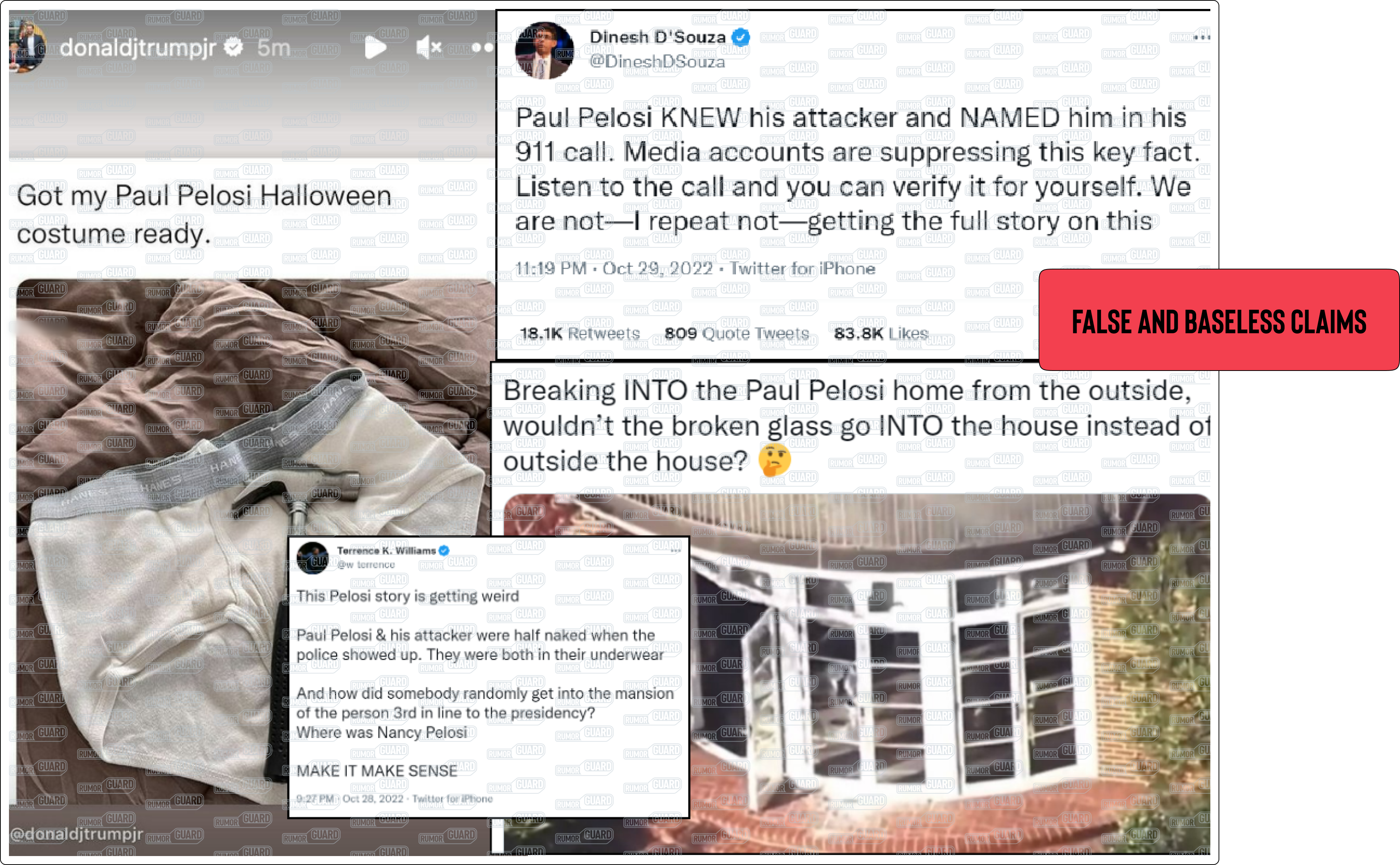
YES: Paul Pelosi, husband of House Speaker Nancy Pelosi, was violently attacked at the couple’s home in San Francisco on Oct. 28. YES: The accused attacker, David DePape, has been charged with a range of crimes by state and federal officials, including attempted murder, attempted kidnapping, assault with a deadly weapon, elder abuse, residential burglary, false imprisonment and threatening the life of a public official. NO: Despite widespread claims, DePape was not wearing only underwear when police arrived. NO: DePape and Pelosi did not know each other, did not visit a gay bar together before the attack and were not engaged in a tryst when police arrived. YES: Partisans cited excerpts of coded language that Pelosi used with an emergency dispatcher and other details to push misleading questions about the attack and to imply that it was staged.
NewsLit takeaway: Breaking news events are often chaotic and confusing to follow. Confirmed details take time to emerge, especially when there is a criminal investigation involved. In the interim, trolls and other bad actors, along with well-intentioned internet sleuths, try to fill the information void with speculation, baseless claims and fabrications. Their goals range from the pursuit of engagement and clout, to establishing favorable political narratives, to intentionally spreading confusion to obscure the truth.
The attack on Pelosi fit this pattern. Partisans immediately sought to concoct conspiratorial narratives to minimize the seriousness of the attack and to upstage the political motivations behind it. The Pelosi attack falsehoods are a solemn reminder to be cautious about sharing or amplifying information and to avoid jumping to conclusions during breaking news events until a fuller, fact-based picture emerges.
No, Trump didn’t release statement congratulating Musk on Twitter takeover

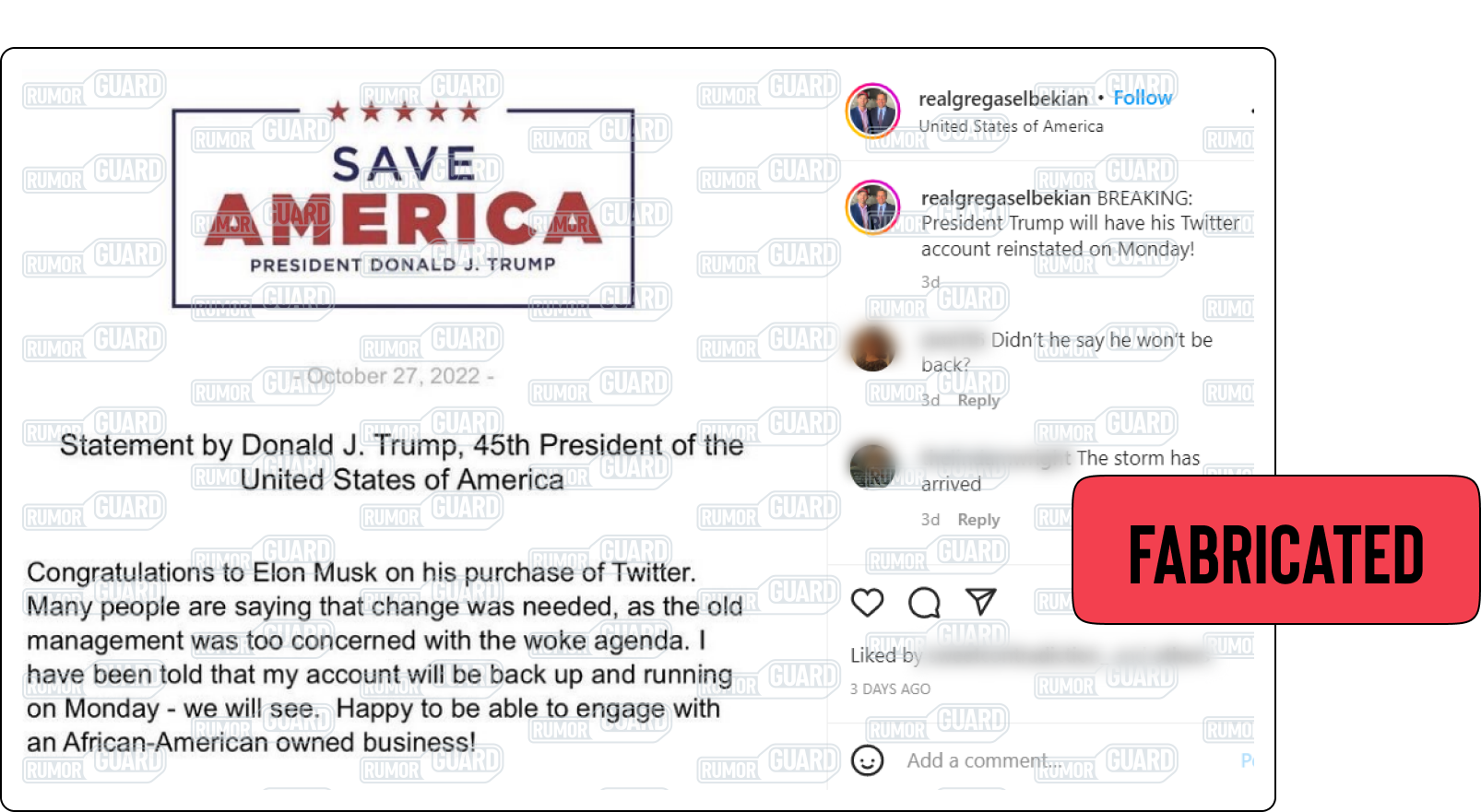
NO: This statement was not released by former President Donald Trump shortly after Elon Musk took control of Twitter on Oct. 27. NO: As of Nov. 7, Trump’s account has not been reinstated, nor has Musk or Twitter made any announcements about ending Trump’s suspension. YES: Trump told Fox News he plans on staying on Truth Social, the social media platform he founded. YES: A spokesperson for Trump confirmed that the alleged Trump statement is a fabrication.
NewsLit takeaway: Convincing fabricated statements can be created and shared in minutes, and often surface in the immediate aftermath of breaking news. The fake Trump statement spread quickly online after Musk closed his Twitter purchase. While supporters like commentator Dinesh D’Souza posted it as if it were genuine (the tweet was subsequently deleted), Trump’s political action committee never posted the statement on its official site or released any such statement to reporters.
Screenshots of alleged statements or social media posts that circulate without any live URLs are a red flag for credibility. Searches for additional news sources also often reveal only a single or partisan source for a piece of viral content.
| You can find this week's rumor examples to use with students in these slides. |