|
Year in review: AI and news literacy
There was an abundance of teachable moments in the news this school year. While social media, press freedom and misinformation are recurring topics in The Sift, this year also saw a rapid advancement in artificial technology — a topic that dominated headlines and sparked intense public interest following the release of ChatGPT.
A popular text-generating AI tool, ChatGPT reached over 100 million users within two months of its launch on Nov. 30, 2022, and raised important news literacy questions for educators, students, journalists and the broader public. Many of the most-clicked story links in The Sift this school year were about the rise of AI, such as the first syndicated AI-generated political cartoon and the first AI-generated presidential election ad. Generative AI tools have also sparked a public debate over how the technology should or shouldn’t be used in school, as the most-clicked story this year examined, as well as how it affects journalism and misinformation.
As we conclude for the school year, here are three key takeaways in news literacy about AI:
 |
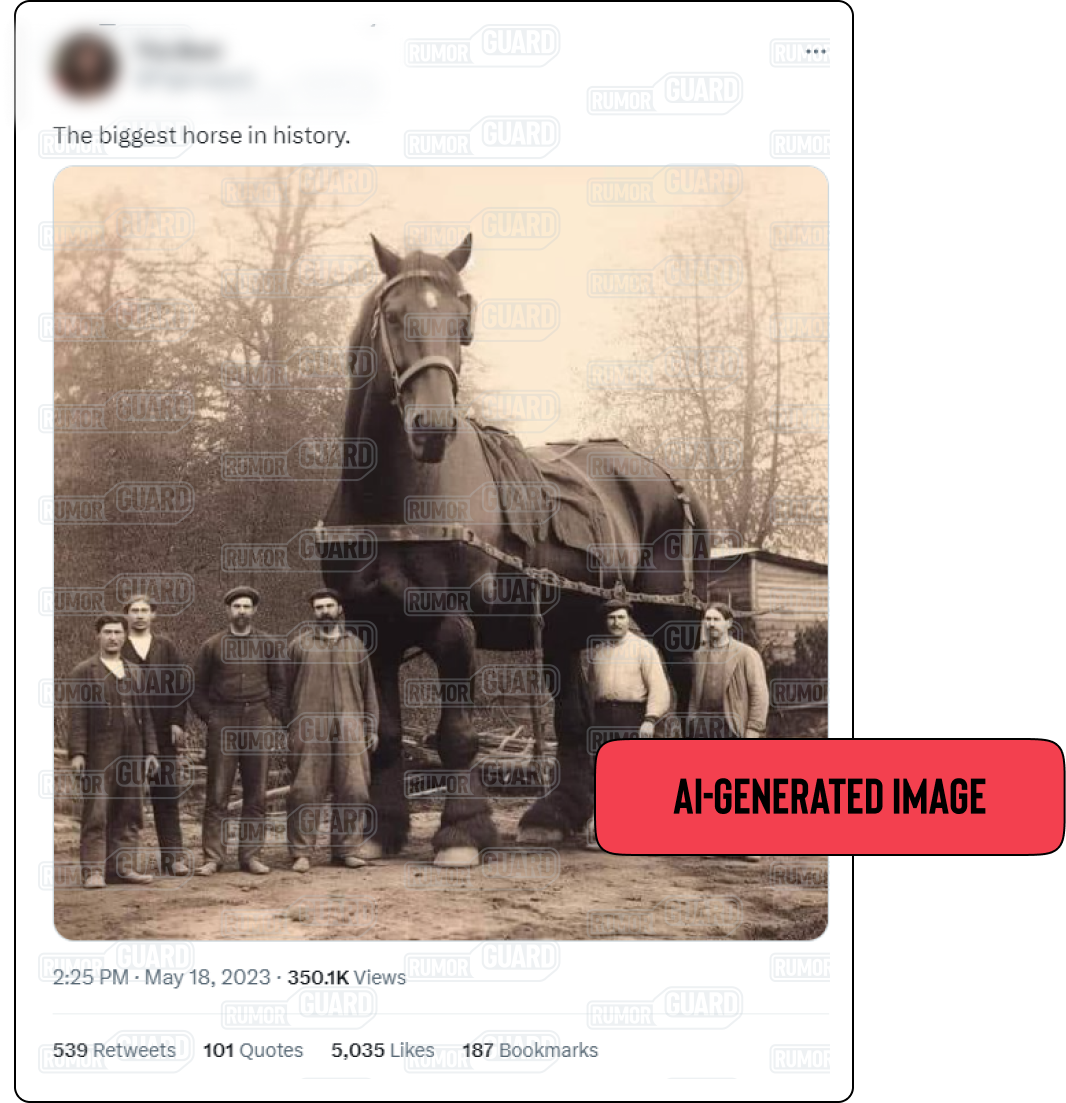
AI has the potential to accelerate misinformation. Generative AI chatbots generate impressively accurate, nuanced text reponses within seconds, but they’re also prone to error and have even been shown to fabricate nonexistent articles from legitimate news outlets. Other AI tools can generate synthetic images, voices and video. Experts worry bad actors could use these tools to generate disinformation and spread it at an alarming scale.
|
 |
AI tools can combat misinformation. It’s not all doom and gloom. Although AI can be used to create disinformation, it can also potentially help combat it by automating fact-checking.
|
 |
AI will affect journalism indefinitely. While some reputable news organizations have been using AI software for years (to parse financial reports and sports scores, for example), the shift in sophistication in publicly accessible AI tools will likely impact journalism practices and processes in ways yet to be fully realized. Newsrooms are already grappling with how to use AI while keeping their audience informed about these decisions. In January, it was revealed that CNET had been quietly publishing AI-generated stories without disclosing this practice to their readers. The stories contained several inaccuracies. Meanwhile, Wired became one of the first newsrooms to develop a generative AI policy to be transparent with its readers.
|
| The emergence of ChatGPT and other AI tools shows that news literacy education is more important than ever. We’ll be following this technology as it continues to evolve and will be back in the fall with more resources and news literacy insights. |
|